
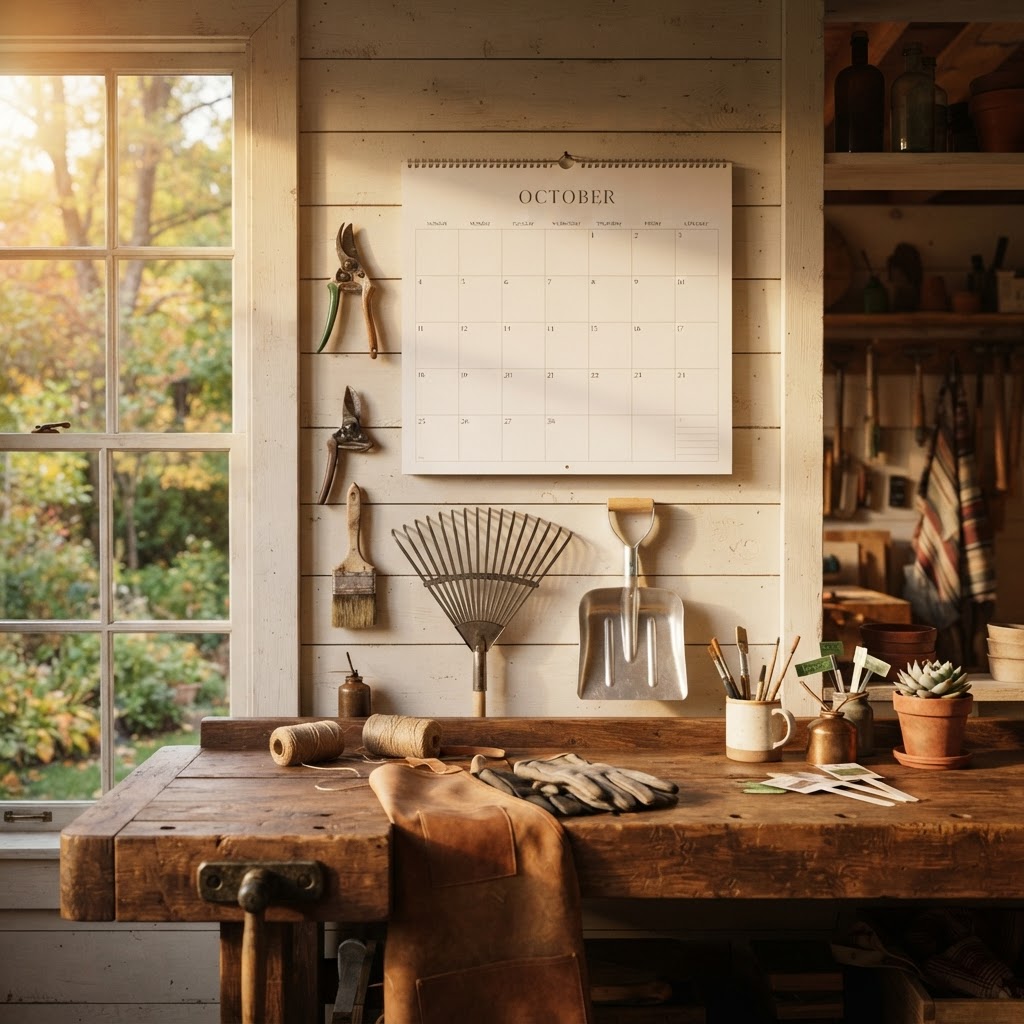
Why a Calendar Matters
The homeowners who avoid major repairs are not the ones who spend the most money. They are the ones who follow a calendar — small, deliberate actions performed at the right time of year, before problems compound and multiply. A cracked washer replaced today costs fifteen dollars. The same washer, left until it bursts, costs a floor, a ceiling, and a week of disruption.
A maintenance calendar is not about doing more. It is about doing the right thing at the right time. Winter is for protection. Spring is for assessment. Summer is for upkeep. Autumn is for preparation. Each season has its tasks, and each task has its moment.
January to March: The Quiet Months
Winter is not a time for major projects. It is a time for observation and protection — watching for the early signs that something is wrong while systems are under maximum stress.
- Check the attic for frost accumulation or ice damming — early signs of insulation failure.
- Inspect visible pipes for condensation or minor freezing, especially those along exterior walls.
- Replace HVAC filters — they work hardest during heating season.
- Test all smoke and carbon monoxide detectors — heating systems increase risk.
- Check weatherstripping on exterior doors and replace any that has hardened or torn.
April to June: The Awakening
Spring is the home's annual physical examination. Everything that was hidden by winter is now visible, and every system that was stressed by cold needs assessment.
- Clean gutters and downspouts — remove winter debris and check for sagging.
- Inspect the roof for lifted or missing shingles — winter wind and ice take their toll.
- Service the air conditioning before the first heatwave, not during it.
- Check exterior caulking around windows and doors — reapply where cracked.
- Inspect the foundation for new cracks — mark them with tape and monitor.
- Turn on outdoor spigots and check for leaks that developed over winter.
July to September: The Peak Season
Summer is when systems are under maximum load. Air conditioning runs constantly. Plumbing handles more activity. The heat itself accelerates wear on seals and finishes.