
Why Complexity is the Enemy of Consistency
The primary reason most domestic systems fail is over-engineering. When we set up a labeling system that requires a specific marker, a precise angle, or a multi-step filing process, we create friction that eventually leads to abandonment. Real life is rarely precise; it is messy, rushed, and unpredictable.
A system that requires perfection to function is destined for obsolescence within weeks. To build lasting structures, prioritize simplicity. If a system requires more than three steps to execute, consider it fragile and prone to breakdown under the pressure of a hectic Tuesday evening.
Designing for Human Behavior
Instead of forcing your family to adapt to an ideal system, design your home to accommodate the path of least resistance. Observe your habits for one week without trying to change them. Where do shoes naturally pile up? Where do unopened mail and loose keys congregate?
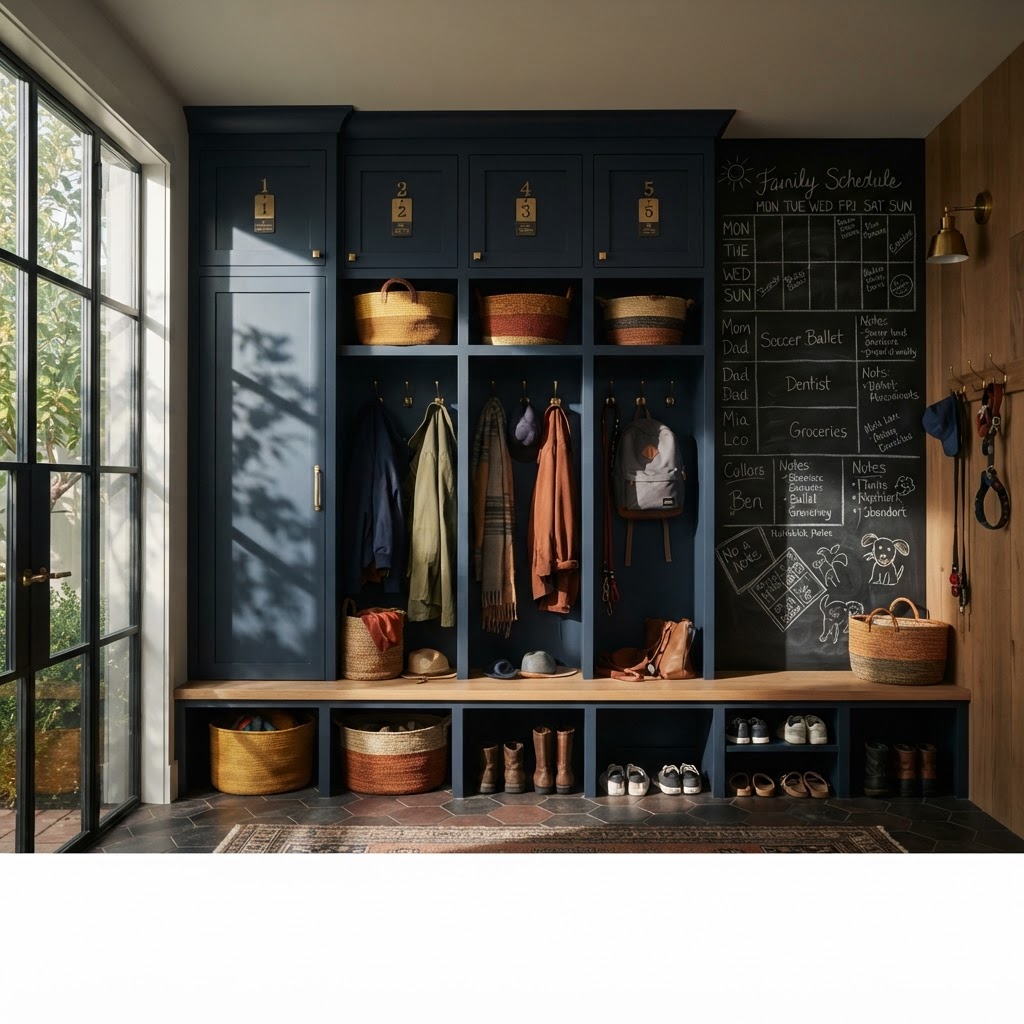
If you find that your family consistently leaves their coats on the dining room chair, a closet system is not the solution. Instead, install hooks exactly where they are already dropping their belongings. Work with your existing behavior rather than fighting against it.
The most effective household system is not the one that looks best in a photograph, but the one that functions when every family member is exhausted and in a hurry.
The Principle of Frictionless Maintenance
The 'frictionless' principle dictates that the difficulty of performing a task should be inversely proportional to its necessity. If you want your recycling to be sorted, place the bins in the most accessible spot in the kitchen, not hidden behind a cabinet that requires effort to reach.
Hidden systems, while aesthetically pleasing, often suffer from 'out of sight, out of mind' syndrome. Consider visual cues like clear containers or open shelving for frequently used items. If an object is hidden, you are statistically less likely to interact with it properly, leading to clutter and eventual system collapse.