
Vol. 1 · No. 36 · FreeSeptember 1

THE COUNTIO CHRONICLE

The World's Growing Library of Actionable Knowledge
Home·Editorial·Home Ownership
Intermediate9 min read

July 2026 · Volume 1 · Issue 29

Why Great Homes Run on Systems, Not Motivation

Motivation is a feeling. Systems are infrastructure. The homes that feel effortless do not rely on anyone feeling inspired to maintain them — they rely on systems that run whether you are motivated or not.

Published July 18, 2026
systemshome managementmotivationhabitsinfrastructureroutineschecklistshome design

Every struggling home shares the same assumption: that maintaining it requires motivation. That someone has to feel like cleaning, feel like organizing, feel like keeping things in order. This assumption is the reason the home keeps falling apart. Because motivation is unreliable by nature — it comes and goes with sleep, stress, mood, and weather. A home that depends on it will always be one bad week from chaos.

Why Great Homes Run on Systems, Not Motivation

The Motivation Trap

Motivation feels like the answer because it works — when it is present. When you feel inspired, you clean. When you feel energetic, you organize. When you feel motivated, the home runs. And then Tuesday comes, you are tired, the motivation is gone, and the dishes pile up. Again.

This is not a character flaw. It is an architectural flaw. You have built a home that depends on a resource that is, by definition, intermittent. No building stands on a foundation that is sometimes there and sometimes not. No home does either.

Motivation is weather. Systems are architecture. You cannot run a home on weather.

What a System Actually Is

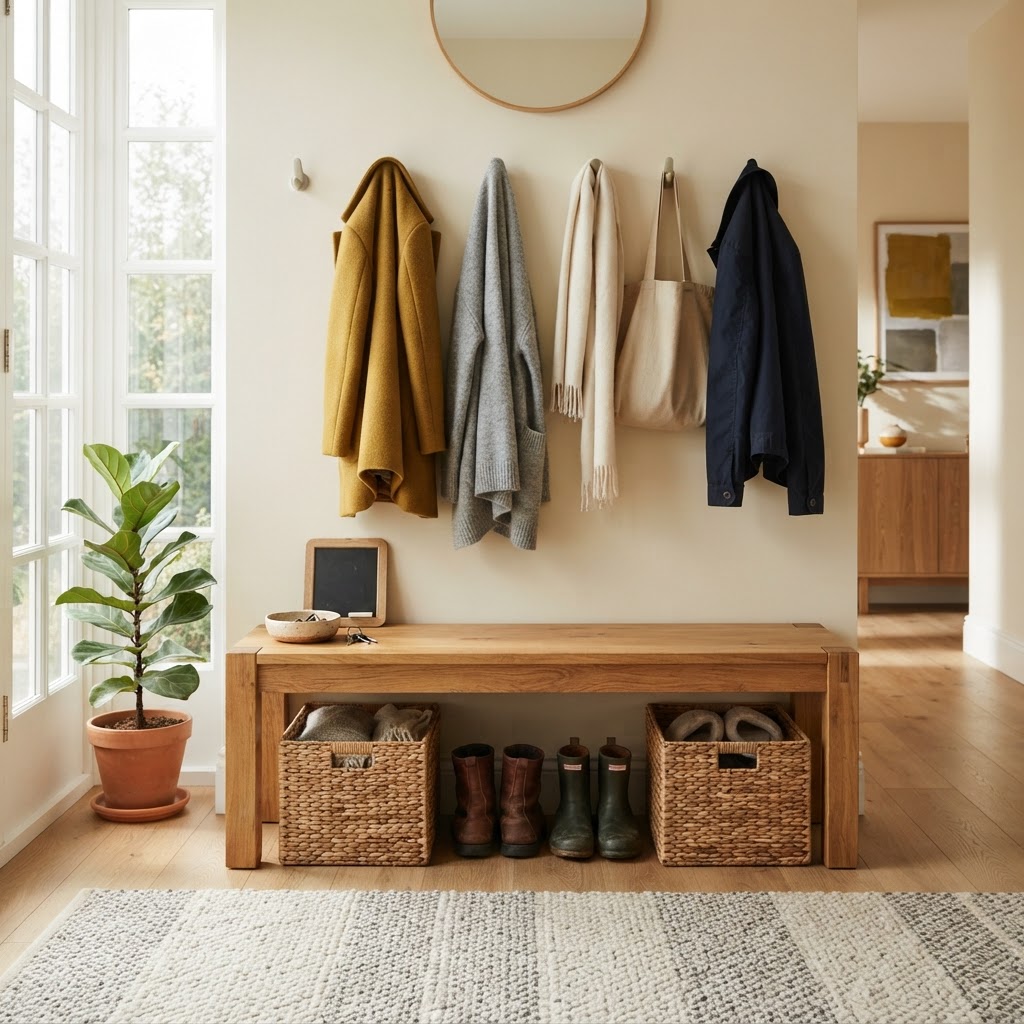
A system is not a complicated set of rules. It is simply a set of decisions made in advance, so that the action does not need to be decided in the moment. The dishwasher runs every night after dinner — not because someone decides to, but because that is the system. The mail is sorted at the same spot every day — not because someone is motivated, but because the system makes it the default.

A good system has three characteristics:

It is obvious. Everyone in the home knows what the system is and what their part in it is. There is no ambiguity about where things go or what happens next.

It is easy. The right action is also the easiest action. The hamper is where the clothes come off. The recycling is where the mail gets opened. The system works with human nature, not against it.

It is automatic. The system runs without a decision being made. It is triggered by a cue — a time, an event, a location — not by a feeling. You do not need to want to do it. You just need to be in the place where the system activates.

Systems vs. Routines vs. Checklists

These three terms are often used interchangeably, but they serve different functions in a well-run home:

A system is the infrastructure — where things live, how they flow, what triggers what. It is the plumbing of the home. Invisible when it works, catastrophic when it does not.

A routine is the temporal layer — what happens when. Morning routine, evening routine, weekly reset. Routines give the system a schedule.

A checklist is the tool — the external memory that ensures nothing is forgotten. Checklists are how systems and routines survive imperfect memory and motivation.

Together, they form a stack: the system provides the structure, the routine provides the timing, and the checklist provides the reliability. A home with all three does not need motivation. It just runs.

The question is not 'How do I stay motivated?' The question is 'What system would make motivation unnecessary?'

When Systems Fail

Systems fail for predictable reasons, and understanding them is the key to building systems that last:

Too many at once. Installing five systems simultaneously guarantees that none of them will stick. Start with one — the one that would have the biggest impact — and practice it until it is invisible. Then add the next.

Too complex. A system that requires seven steps, a chart, and a label maker will be abandoned within a month. The best systems are the simplest ones: one trigger, one action, one location.

No maintenance. Systems degrade. The hamper moves. The recycling bin fills. The habit drifts. A system that is never checked and adjusted will silently stop working. The best systems include a periodic review — a monthly check that asks: is this still working?

The Home That Runs Itself

The goal of home systems is not perfection. It is sustainability. A home that runs on systems can survive a bad week, a busy month, a new baby, a move, an illness — because the systems hold even when the people cannot. The motivation comes and goes, but the architecture remains.

This is the deepest insight of home management: the homes that feel effortless are not the ones where the people try harder. They are the ones where the people have stopped trying — because they built something that does not need trying. The system runs. The home holds. And the people who live there are free to spend their energy on things that actually matter.

You will not always feel motivated. You do not need to. Build the system. Then let it carry the weight you have been carrying alone.