
Vol. 1 · No. 42 · FreeOctober 23

THE COUNTIO CHRONICLE

The World's Growing Library of Actionable Knowledge
Home·Editorial·Home Ownership
Beginner7 min read

July 2026 · Volume 1 · Issue 29

Small Habits That Make Home Life Easier

Motivation is unreliable. Habits are not. Here are the small, repeatable actions that quietly transform a chaotic home into one that runs itself — from the two-minute reset to the surface rule.

Published July 18, 2026
habitshome routinesdaily habitshome managementproductivitysmall actionshome systems

The homes that feel easy to live in are not the ones with the most clever storage or the strictest schedules. They are the ones where small, repeatable habits have been installed so deeply that no one has to think about them anymore. The dishwasher gets loaded because that is what happens after dinner. The shoes go in the basket because that is where shoes go. Not because someone decided to do it — because the habit decided for them.

Small Habits That Make Home Life Easier

Why Habits Outperform Willpower

Willpower is a finite resource that depletes throughout the day. If keeping your home together requires constant decisions — where to put things, when to clean, whether to deal with that pile — you will eventually run out of decision-making energy and the system collapses.

Habits solve this by moving the decision out of the moment. Once a behavior becomes habitual, it runs automatically. You do not decide to brush your teeth. You just do. The same can be true for the small actions that keep a home from sliding into chaos.

The goal is not to care more. It is to need less caring.

The Two-Minute Reset

The single most powerful home habit is the two-minute reset: any task that takes less than two minutes gets done immediately, not later. Hanging up the coat. Putting the dish in the dishwasher. Wiping the counter. Sorting the mail.

The reason this works is mathematical. A two-minute task deferred does not stay two minutes — it compounds. Five deferred two-minute tasks become a fifteen-minute session that now requires motivation to start. Twenty deferred tasks become an overwhelming weekend project. The two-minute rule keeps the debt at zero.

The Surface Rule

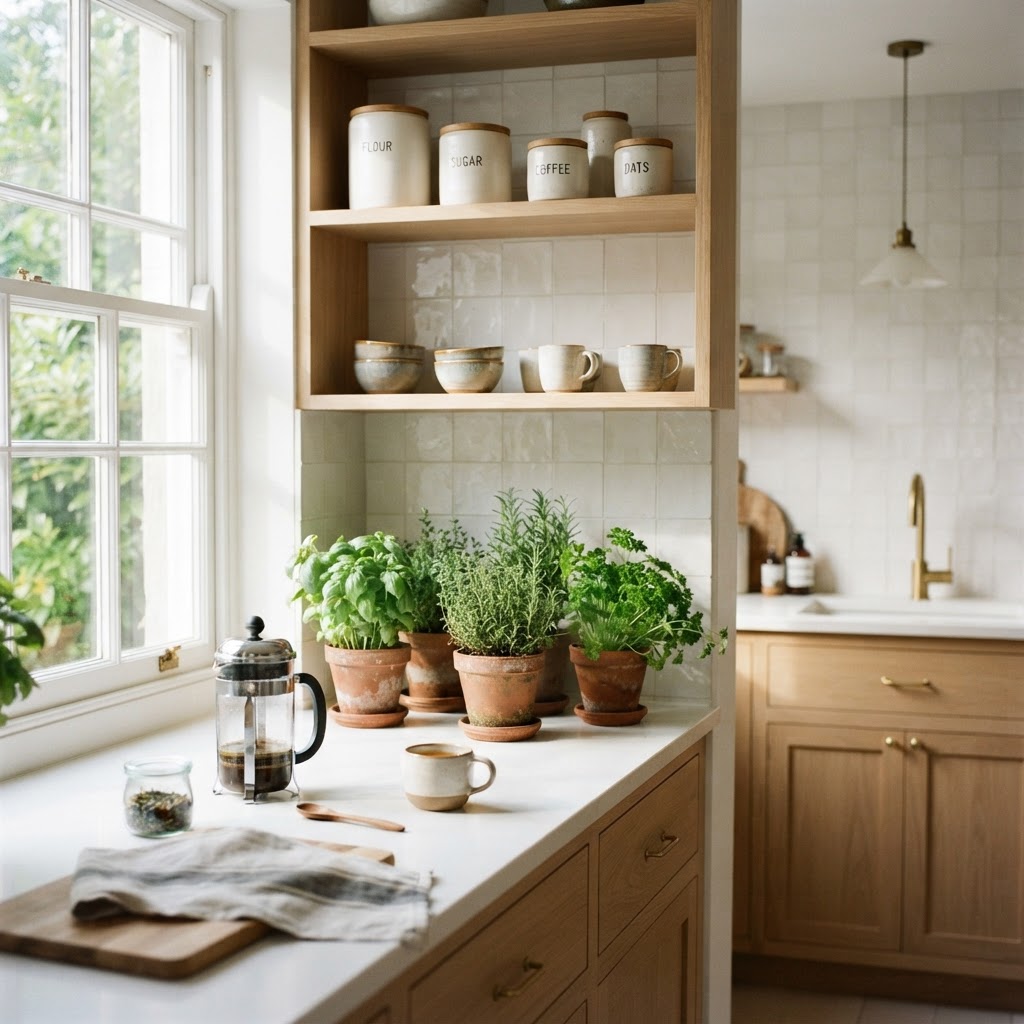
Flat surfaces are magnets for clutter. The kitchen counter, the dining table, the top of the dresser, the entryway console — these are the places where things land when you do not know where else to put them.

The surface rule is simple: horizontal surfaces are kept clear by default. Not spotless — but clear of anything that does not belong there. This one habit, practiced consistently, transforms the visual feel of a home more than any other single change.

The Power of Proximity

If something is hard to put away, it will not be put away. If the hamper is in the bedroom but you change in the bathroom, clothes will end up on the floor. If the recycling bin is in the garage but you open mail in the kitchen, the mail will pile up on the counter.

The fix is not more discipline — it is better design. Move the hamper to where the clothes come off. Put a recycling bin where the mail gets opened. Store the coffee maker next to the mugs. When the right action is also the easiest action, the habit forms without effort.

Do not try to change your behavior to fit your home. Change your home to fit your behavior.

Evening Preparation, Morning Ease

Mornings are when homes feel most stressful. The rush, the search for lost items, the breakfast chaos. But morning stress is almost always an evening problem in disguise.

Ten minutes of evening preparation — setting out clothes, starting the dishwasher, clearing the kitchen counter, setting the coffee maker — does not just save ten minutes in the morning. It changes the entire emotional tone of the first hour of the day, which shapes the rest of it.

The Compound Interest of Small Habits

No single habit transforms a home. But the compounding effect of five or six small habits, practiced daily for months, is transformative. The home that felt chaotic becomes the home that runs itself — not because anyone is working harder, but because the system of habits is doing the work.

Start with one habit. Practice it until it is automatic — usually two to three weeks. Then add the next. Within a few months, you will have built an infrastructure of small actions that quietly hold your home together without you ever having to think about it.

Continue Your Planning