
Vol. 1 · No. 42 · FreeOctober 23

THE COUNTIO CHRONICLE

The World's Growing Library of Actionable Knowledge
Home·Article·Home Ownership
Beginner7 min read

July 2026 · Volume 1 · Issue 29

Organizing Outdoor Storage Without the Clutter

Practical systems for taming sheds, garages, and outdoor storage areas — so tools, equipment, and supplies stay accessible, dry, and findable year-round.

Published July 18, 2026
outdoor storageshed organizationgarage organizationtool storagedecluttering

Outdoor storage has a tendency to become a dumping ground. The shed, the garage corner, the side-of-house nook — these spaces accumulate broken tools, half-empty bags of compost, tangled hosepipes, and sporting equipment that has not been used in years. The result is that when you need something, you cannot find it, and when you find it, it is damaged. Organizing outdoor storage is not about tidiness for its own sake. It is about making your tools and equipment last longer, work better, and be available when you need them.

Organizing Outdoor Storage Without the Clutter

Empty Everything First

The only way to organize a cluttered outdoor storage space is to empty it completely. This sounds drastic, but it is the only method that works. Pull everything out, lay it on the lawn or driveway, and confront what you have been accumulating. You will find things you forgot you owned, things that are broken, things that have been replaced, and things that simply do not belong in outdoor storage.

Sort into four piles: keep, repair, donate or sell, and dispose. Be honest. The rusted trowel you have been meaning to sharpen for three years is not going to be sharpened. Let it go.

You cannot organize clutter. You can only organize what you actually need.

Zone by Function

Once you know what you are keeping, group items by function. Gardening tools together. Lawn care equipment together. Decorative items together. Sports and leisure together. Maintenance supplies — fertiliser, weedkiller, salt — together on their own shelf, away from tools and away from anything they could damage.

Assign each zone a specific area of the shed or garage. The most frequently used items go closest to the door, at waist height, where they are easy to grab. Seasonal items — snow shovels, patio furniture cushions, holiday lights — go to the back or up high, since you only need them occasionally.

Vertical Storage Is Your Friend

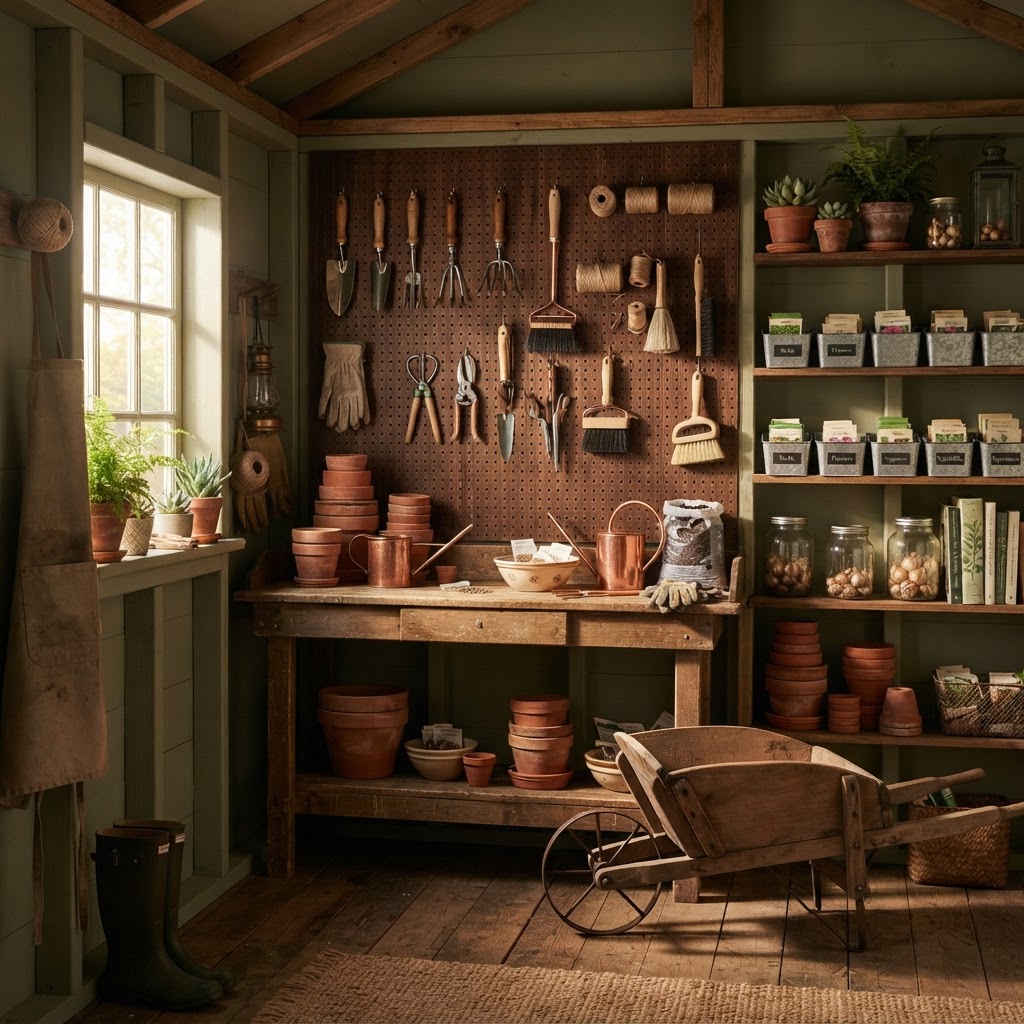
Outdoor storage spaces are rarely large enough for everything you need to keep. The solution is vertical. Pegboards on walls hold hand tools within sight and reach. Hooks hold hoses, extension leads, and long-handled tools. Shelving units use the full height of the space rather than just the floor. Magnetic strips hold metal tools securely and visibly.

The principle is simple: everything off the floor. A clear floor means you can walk in, find what you need, and walk out. It also means water from rain or condensation does not sit against your equipment causing rust and rot.

The floor is for walking. The walls are for storing. The ceiling is for seasonal overflow.

Protect From Moisture

Moisture is the enemy of outdoor storage. Metal tools rust, wooden handles rot, electrical equipment corrodes, and bags of compost go mouldy. Ventilation is essential — a shed without airflow becomes a damp box that destroys everything inside it. Install vents if your shed lacks them, and consider a moisture absorber for enclosed spaces.

Store metal tools with a light coating of oil on blades and moving parts. Hang them rather than standing them on the floor. Keep electrical tools in their original cases or on shelves above floor level. Check periodically for leaks in the roof and walls — a small drip over a season can ruin expensive equipment.

Label and Maintain

A storage system only works if you can find things. Label shelves, bins, and hooks so everything has a designated home and anyone using the space knows where items belong. Clear containers let you see contents at a glance; opaque bins need labels.

Build a maintenance habit. Twice a year — spring and autumn — spend an hour returning items to their zones, clearing out anything that has accumulated, and checking for damage or moisture. A brief, regular reset prevents the gradual slide back into chaos that defeats every storage system left unattended.

The Test of a Good System

You will know your outdoor storage is working when you can send someone else to find a specific tool and they return with the right one in under a minute. That is the standard. Not aesthetics, not Instagram-worthy tidiness — functionality. When your tools are protected, accessible, and returned to their place after each use, your outdoor projects become easier, your equipment lasts longer, and the shed stops being a source of dread and becomes a source of quiet satisfaction.

Continue Your Planning