
Vol. 1 · No. 42 · FreeOctober 23

THE COUNTIO CHRONICLE

The World's Growing Library of Actionable Knowledge
Home·Article·Home Ownership
Intermediate6 min read

July 2026 · Volume 1 · Issue 29

Organizing Small Spaces Efficiently

When square footage is limited, the right systems matter more than the size of the room.

Published July 18, 2026
small spacesorganizationhomestorage

Living in a compact footprint requires a shift in perspective, moving away from the urge to fill every corner toward a disciplined focus on functionality. When square footage is limited, the environment demands that every object serves a purpose or provides genuine value to your daily routine.

Organizing Small Spaces Efficiently

The Foundation of Decluttering

Before introducing storage solutions, you must establish a baseline of essential items. In a small space, clutter is not merely an aesthetic grievance but a physical impediment to movement and mental clarity. Conduct an honest audit of your belongings, keeping only those that are used with high frequency or hold significant meaning.

Adopting a 'one surface' rule—keeping flat surfaces like desks, consoles, and kitchen counters entirely clear—creates an immediate sense of order. When objects are not left out, the room feels larger, and the act of cleaning becomes a matter of seconds rather than minutes.

Vertical Thinking and Wall Utilization

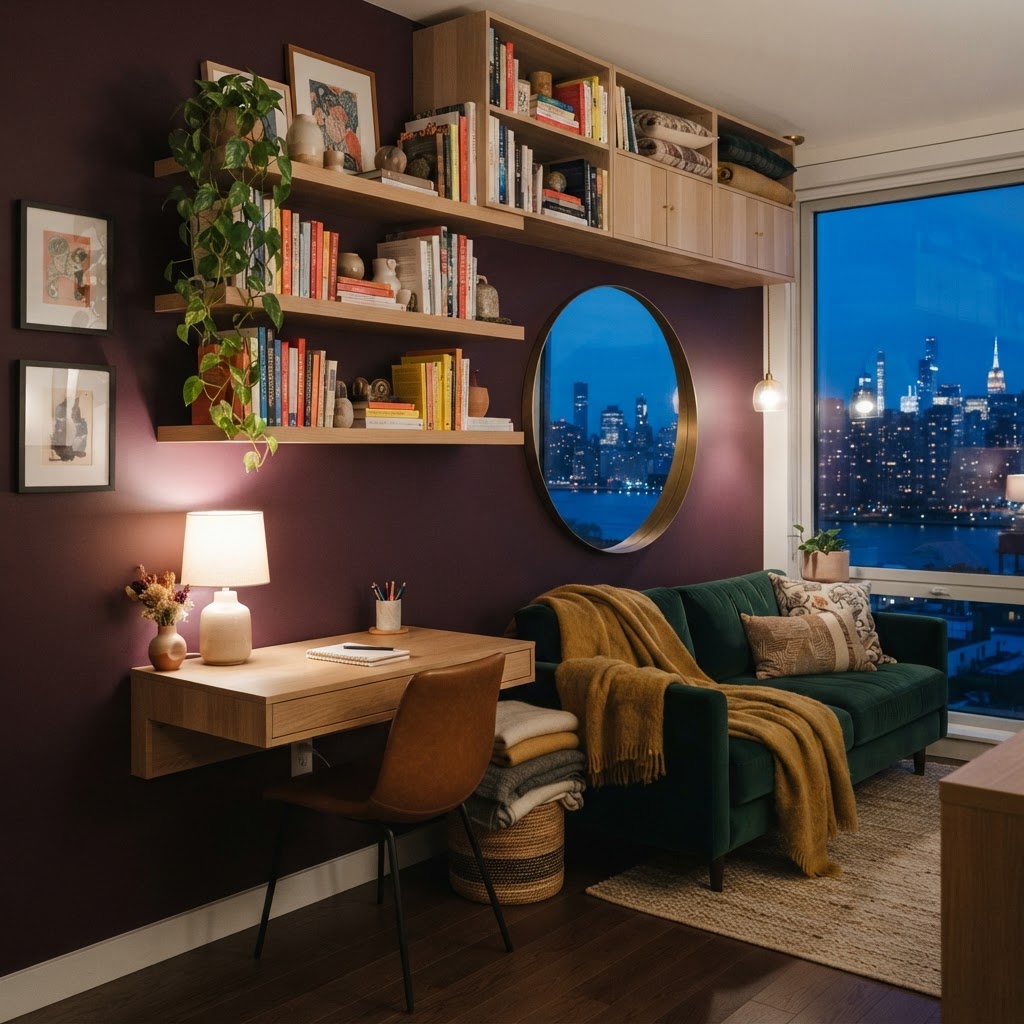
When the floor is crowded, look to the perimeter of your home. Walls are often underutilized assets that can house shelving, hooks, or modular rail systems. Installing shelving that reaches toward the ceiling draws the eye upward, effectively emphasizing the height of the room rather than its width.

In a small apartment, your walls are not just boundaries; they are your most valuable storage assets waiting to be activated.

Consider the backs of doors for everyday items like jackets, bags, or cleaning supplies. Using over-the-door organizers or mounted racks keeps high-traffic items off the floor, ensuring your primary living area remains clear of transit clutter.

Multi-Functional Furniture and Zoning

In a studio or small room, furniture must earn its place. Prioritize pieces that perform multiple roles, such as an ottoman with internal storage or a dining table that folds down into a wall-mounted desk. These items allow a space to transition from a professional office to a dining area with minimal effort.

Zoning is equally critical. Use rugs or open-backed bookshelves to define boundaries between living, sleeping, and working areas. By creating visual demarcations without blocking light or flow, you allow the room to perform diverse functions while maintaining a cohesive aesthetic.

Visual Lightness and Reflective Surfaces

The perception of space is as important as the actual dimensions. Utilizing mirrors can double the visual depth of a room, especially when placed opposite a window to capture and diffuse natural light. Choose furniture with legs—a sofa or chair raised off the floor allows the eye to travel underneath the piece, making the room feel less crowded and more airy.

Avoid heavy, dark pieces that anchor a room too firmly. Instead, opt for glass, acrylic, or light-toned woods. These materials provide the necessary utility of furniture while remaining visually unobtrusive, preventing the space from feeling cramped or overwhelmed.

The Habit of Maintenance

Efficiency in small spaces is not a one-time project; it is a recurring commitment to maintenance. Establish a 'reset' habit at the end of each day where items are returned to their designated homes. Because the buffer between order and chaos is thinner in a small home, consistency is the only way to prevent clutter from accumulating.

Your final takeaway should be this: prioritize your space for the life you are actually leading today, not the one you hope to lead eventually. Periodically re-evaluate your systems every quarter to ensure your home remains a source of calm rather than an exercise in management. By keeping your surfaces clear and your storage deliberate, you reclaim the true value of your living environment.

Continue Your Planning
Further Reading

Decluttering Your Home Without Feeling Overwhelmed

A calm, room-by-room approach to clearing the clutter — without the paralysis that usually accompanies it.

Organize Every Room Like a Professional

The systems professional organizers use — adapted for every room in your home.

The Hidden Cost of Household Clutter

Clutter is not just visual noise — it carries a quiet tax on your time, money, and mental clarity.

Creating a Family Command Center

One wall, one system, one place where the household's life quietly organizes itself.

Preventing Water Damage Before It Starts

Water is patient. It finds the smallest gap and does not stop. Left unchecked, a slow drip becomes a collapsed ceiling and a mould problem that costs thousands.

The Beginner's Guide to Home Maintenance

If you have just taken responsibility for a home, start here. The essential toolkit, the core habits, and the annual milestones that keep everything running.

Your First Apartment Survival Guide

Your first apartment is a crash course in adulthood. Here is what you actually need, what you do not, and how to make a small space feel like home.

Organizing Outdoor Storage Without the Clutter

Practical systems for taming sheds, garages, and outdoor storage areas — so tools, equipment, and supplies stay accessible, dry, and findable year-round.

Making Your Home More Comfortable

Comfort is not a purchase. It is a layered practice — sensory, social, personal, and seasonal. Here is how to make your home genuinely comfortable, not just visually appealing.