
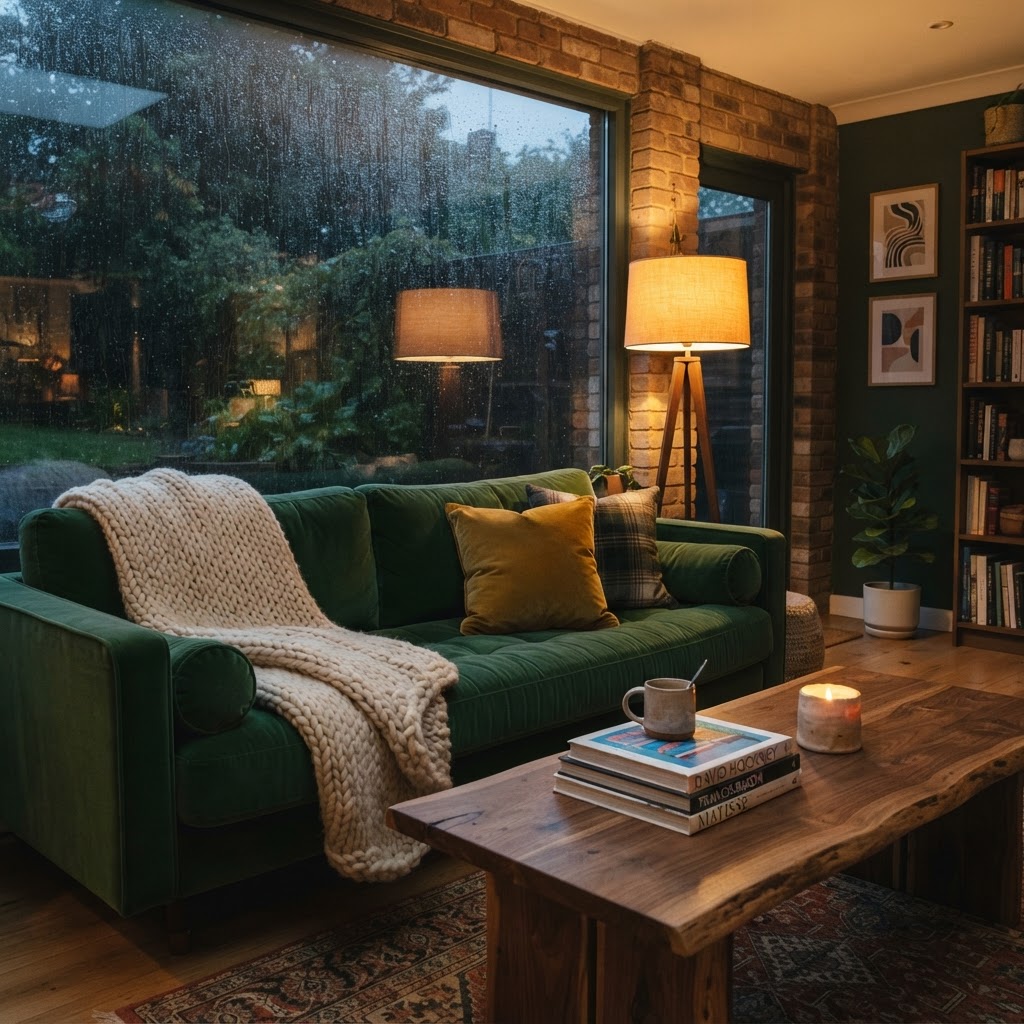
What 'Comfortable' Actually Means
Comfort is not softness. A home can be plush and still feel unwelcoming. A home can be minimal and feel deeply comfortable. The difference is not in the materials — it is in the layers of intention beneath them.
True comfort is the feeling that a space supports you. That the temperature is right, the sound is right, the light is right, and the space is arranged for the way you actually live. It is the absence of small frictions — the draft you always feel, the chair that is never quite right, the light that is always too harsh or too dim.
Comfort is not the absence of design. It is the result of design that forgot to announce itself.
The Sensory Layer: Texture, Temperature, Sound
The most immediate dimension of comfort is sensory. Your body registers the environment before your mind does, and a space that feels good to the body is already most of the way to comfortable.
Texture: Mix hard and soft surfaces. A wood floor with a wool rug. A leather chair with a linen throw. A stone countertop with a wooden cutting board. Monotone textures — all hard or all soft — feel flat. Variation creates richness.
Temperature: Most homes are either slightly too warm or slightly too cool, and we adjust to the discomfort without ever fixing it. A programmable thermostat, a draft blocker, a fan in the bedroom — small interventions that eliminate the low-grade physical distraction of being slightly uncomfortable.
Sound: A completely silent home can feel sterile. A home with constant noise can feel stressful. The sweet spot is a background hum — ambient, consistent, unobtrusive. Rugs, curtains, and upholstered furniture soften hard acoustics and add warmth that you feel before you hear.
The Social Layer: How Layout Shapes Connection
Comfort is not just physical — it is relational. A home where people naturally gather, converse, and relax together is comfortable in a way that no amount of soft furnishings can replicate. And this is shaped by layout more than by furniture.
Seats that face each other, not the television. A kitchen island where someone can sit and talk while you cook. A dining table that is clear enough to use, not buried under mail. These arrangements make connection the default rather than something that has to be organized.