
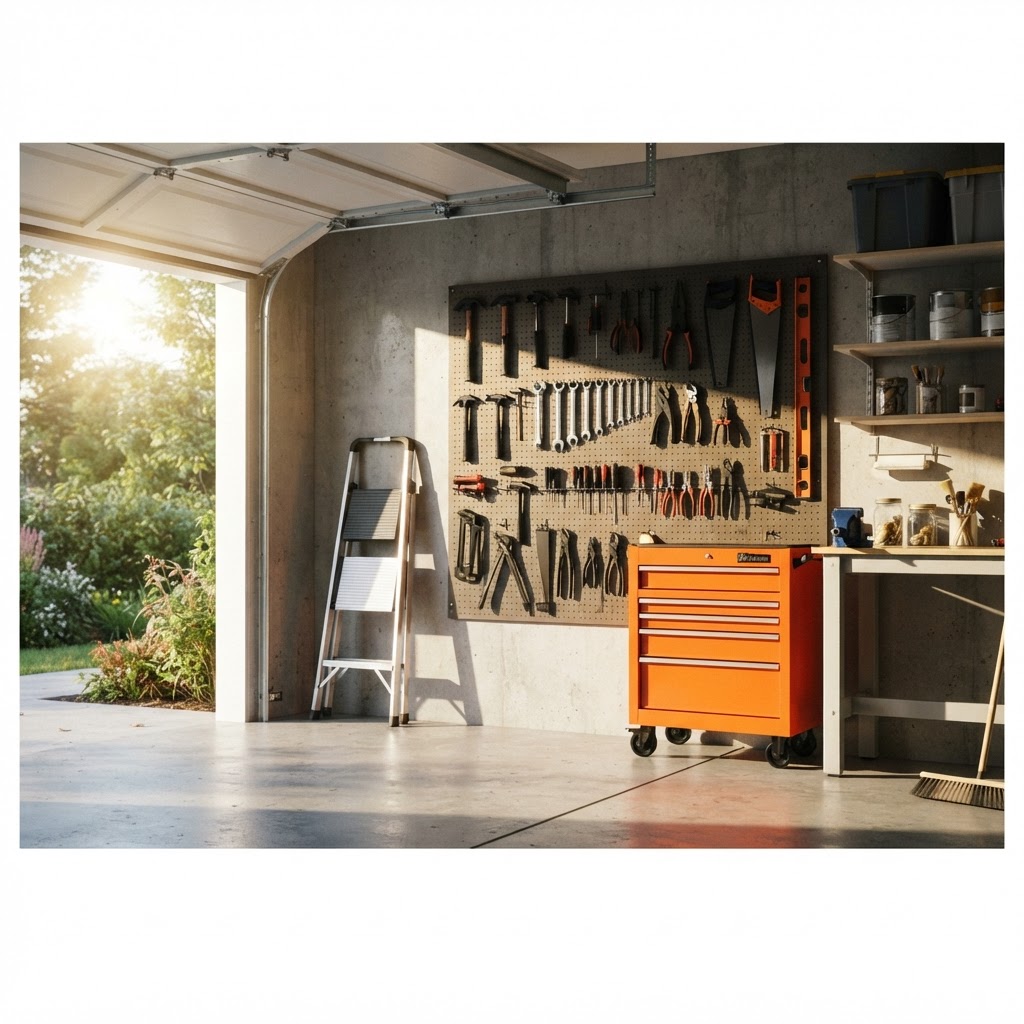
The Essential Toolkit
Before you maintain, you need the tools to do it. You do not need a professional workshop, but you do need a foundational kit that covers ninety percent of household tasks.
- A set of screwdrivers — Phillips and flathead in three sizes each.
- An adjustable wrench and a pair of pliers.
- A claw hammer and a rubber mallet.
- A tape measure, a level, and a utility knife.
- A putty knife for patching and scraping.
- A plunger — one for the sink and one for the toilet.
- A flashlight and a headlamp for dark spaces.
- A bucket, microfiber cloths, and a few basic cleaning supplies.
This kit will handle filter changes, minor plumbing fixes, picture hanging, furniture assembly, and most small repairs. Everything else — specialized plumbing, electrical work, major carpentry — is professional territory, at least at first.
Weekly Habits
Some maintenance tasks are so simple they become habits. Do these weekly, and your home will stay ahead of most problems.
- Check the kitchen and bathroom for leaks — look under sinks, around toilets, and behind appliances.
- Empty the dryer lint trap before every load — this is the single most important fire prevention habit in the home.
- Ventilate after showers — run the fan for thirty minutes to prevent mould.
- Wipe down kitchen surfaces — grease buildup attracts pests and degrades finishes.
- Take out recycling and rubbish before it overflows — pests are attracted to overflow.
Monthly Tasks
Once a month, set aside an hour for the tasks that keep systems running efficiently.
- Replace or clean HVAC filters — more often during peak heating and cooling seasons.
- Clean faucet aerators and showerheads — soak in vinegar to remove mineral buildup.
- Run water in infrequently used drains — prevents the P-trap from drying out and letting sewer gas in.
- Inspect the garbage disposal — grind ice and citrus to clean the blades.
- Check smoke detector batteries — test each one by pressing the test button.
- Clean the range hood filter — grease buildup reduces efficiency and creates a fire hazard.
You do not need to know everything about your home. You need to know what is normal, so you can recognise what is not.
Quarterly Check-Ins
Every three months, do a slightly deeper inspection. These are the tasks that catch problems before they become visible.