
Vol. 1 · No. 37 · FreeSeptember 10

THE COUNTIO CHRONICLE

The World's Growing Library of Actionable Knowledge
Home·Editorial·Home Ownership
Beginner8 min read

July 2026 · Volume 1 · Issue 29

Preparing Your Home for Guests

Hospitality is not about perfection. It is about making people feel genuinely welcome. Here is how to prepare your home for guests — from the bedroom to the bathroom to the moment they walk through the door.

Published July 18, 2026
hospitalityguestsguest bedroomhostingentertaininghome preparationwelcome

There is a difference between a home that is ready for guests and a home that is ready for a photograph. The first makes people feel comfortable. The second makes them feel like they should not touch anything. The best hosts understand that hospitality is not about showcasing your home — it is about removing every small barrier between your guest and the feeling of being at ease.

Preparing Your Home for Guests

The Hospitality Mindset

Most people overthink hosting. They focus on what to cook, what to clean, what to hide — and miss the point entirely. A guest who arrives to a home that is clean but cold, where they are afraid to put their drink down or unsure where to sit, is not comfortable. They are performing gratitude.

The hospitality mindset shifts the focus from the host's home to the guest's experience. What will they need in the first five minutes? What will they need in the bathroom? What will make them feel that they are not an imposition but an expected, welcomed presence?

The best hosts do not prepare their home for inspection. They prepare it for comfort.

The Guest Bedroom: Comfort Over Perfection

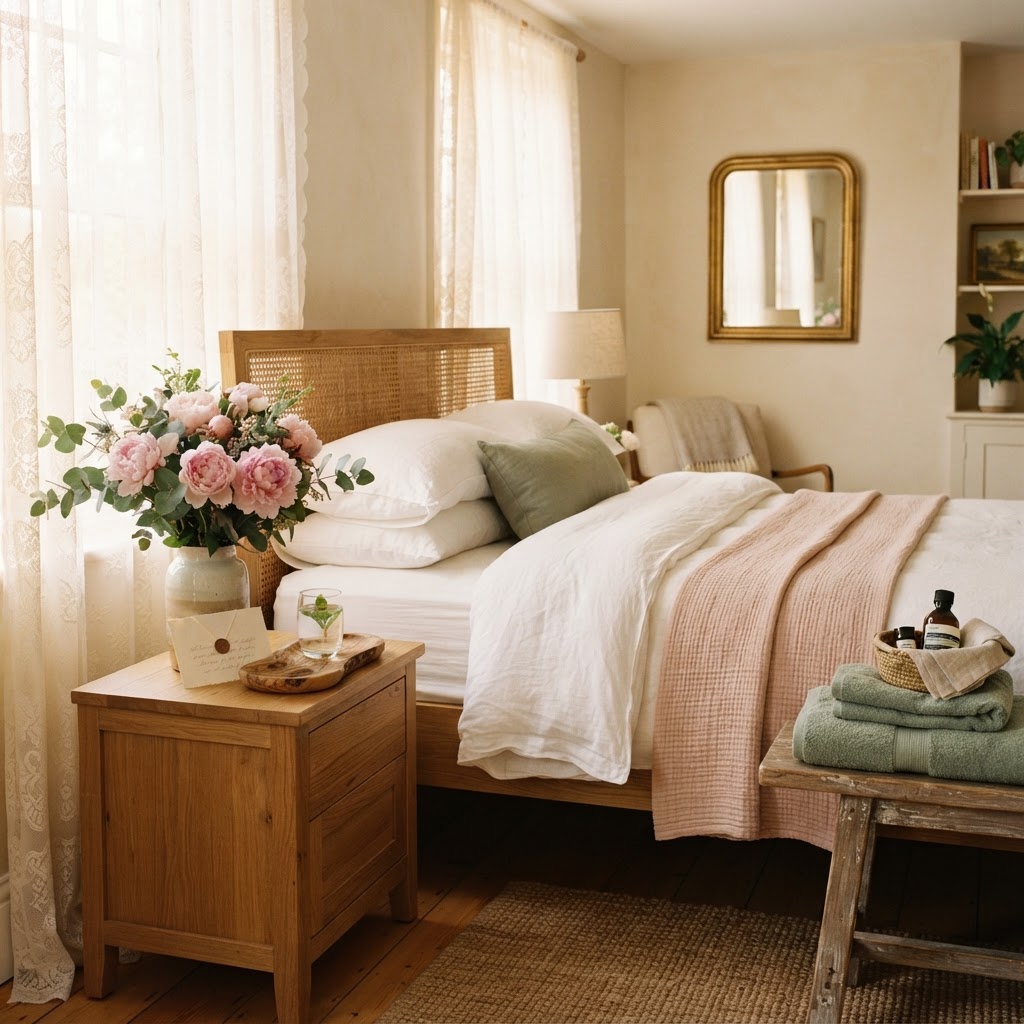
A guest bedroom does not need to be a magazine spread. It needs to be a place where someone can sleep, find a light, charge their phone, and wake up without feeling disoriented. That requires surprisingly little:

  • Crisp, clean linens. Not the fanciest — the freshest. A bed that has been recently made with clean sheets signals care more than thread count ever could.
  • A clear nightstand. A lamp, a glass of water, a phone charger, and a small surface for personal items. Clutter on the nightstand is the fastest way to make a guest feel they are in someone else's space.
  • Temperature control. An extra blanket within reach. Guests will not ask for one — they will simply be cold. Make it visible and accessible.
  • A small touch. A flower, a book, a note. Something that says: someone thought about you being here.

The Bathroom Visit

The bathroom is where a guest's comfort is most easily won or lost. A bathroom that is clean, stocked, and private transforms a guest's experience. One that is not can undo every other effort.

The essentials: clean towels set out — not hidden in a cabinet. Toilet paper visible and sufficient. Soap available. A surface clear of personal items. If the bathroom is shared, a brief explanation of where things are prevents the awkward hovering that kills ease.

The Welcome Moment

The first thirty seconds set the tone for the entire visit. When a guest arrives, they are processing a new environment, looking for cues about how to behave, and deciding whether to relax or stay guarded. The host's job is to make the transition from outside to inside as smooth as possible.

This means: take their coat immediately. Show them where the bathroom is before they have to ask. Offer a drink within the first few minutes. Direct them to a seat. These are small gestures, but together they communicate: you are expected, you are welcome, and you can relax.

Food, Drink, and the Unfussy Kitchen

The most common hosting mistake is overcomplicating the food. A host who is stressed about dinner is not hosting — they are performing. Guests can feel the difference, and it makes them less comfortable, not more.

Simple food, served generously, beats elaborate food served anxiously. A pot of soup with good bread. A cheese board with something warm. A meal that can be mostly prepared in advance so the host is present, not trapped in the kitchen. The food is the excuse for the gathering, not the point of it.

Your guests did not come for your cooking. They came for you. Be available.

The Art of Making People Feel at Home

Hospitality is not a skill you are born with. It is a practice — the deliberate arrangement of space, food, and attention so that another person feels comfortable in a place that is not theirs. It requires empathy more than budget, preparation more than talent.

When you prepare your home for guests, you are not tidying for inspection. You are building an experience of welcome. Every clear surface, every stocked towel, every offered drink is a small signal that says: I thought about you being here, and I am glad you came.