
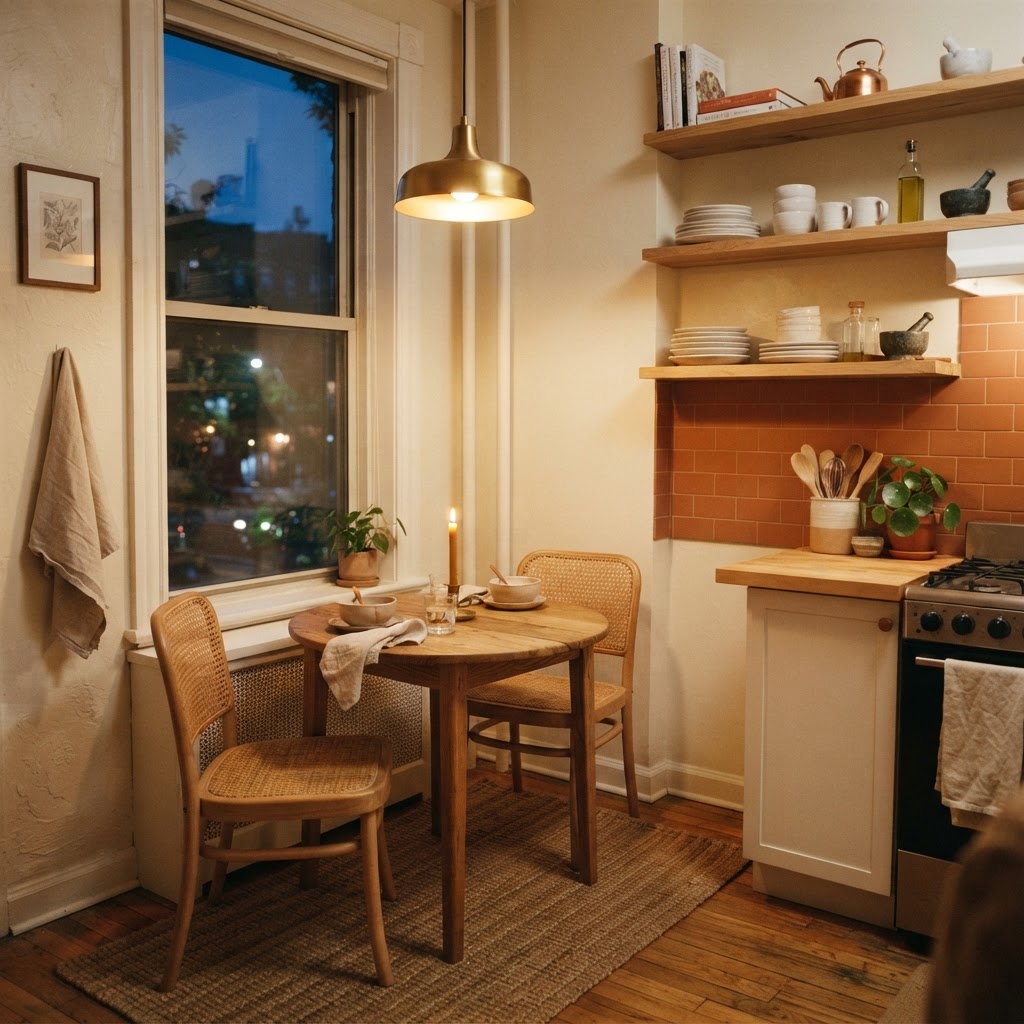
The First Apartment Reality
Your first apartment will not look like the apartments in magazines. It will be small, partially furnished or unfurnished, and equipped with appliances of unknown age and reliability. This is not a failure — it is the universal first-apartment experience. The goal is not to make it look perfect. The goal is to make it functional, safe, and yours. Everything else is a process that unfolds over months and years.
Your first apartment is not a finished home. It is a starting point. Make it work, then make it yours.
The Essential Purchases
Before you buy anything decorative, invest in the essentials that make a space livable. A good mattress — this is the single most important purchase you will make, and it is worth spending more than you think you should. Basic cookware — a frying pan, a saucepan, a baking tray, a knife, a cutting board, and enough utensils to cook and eat. A set of towels and two sets of bed linen. Cleaning supplies — a vacuum or broom, multi-surface cleaner, bathroom cleaner, and laundry detergent. A basic tool kit — a hammer, screwdrivers, a tape measure, and pliers. These are not exciting purchases, but they are the difference between a functional apartment and a daily struggle.
The Kitchen That Cooks for One
Cooking for one is a skill that most first-apartment dwellers learn through trial and error. The key is batch cooking — make three or four portions when you cook, eat one, and refrigerate or freeze the rest. Invest in containers that are freezer-safe and microwave-safe. Build a small pantry of staples — rice, pasta, canned tomatoes, beans, oils, spices — that form the base of multiple meals. Learn three or four reliable recipes that you can cook without a recipe, and rotate them. You do not need to be a chef; you need to be fed.
The Bathroom That Works
The bathroom is the smallest room in most first apartments, and it needs to be functional. Keep it clean — a dirty bathroom degrades daily life more than any other room. Invest in a shower caddy if storage is limited. Keep a plunger handy — you will need it eventually, and you do not want to be searching for one at midnight. Stock basic first aid supplies — plasters, antiseptic, pain relievers, and a thermometer. Know where the water shut-off valve is, because a leaking pipe in a first apartment is a character-building experience you want to be prepared for.
Cooking for one is not a limitation. It is a skill — and it is one that will serve you for life.
The Living Space That Breathes
First apartments are small, and small spaces feel smaller when they are cluttered. Resist the urge to fill every corner. Buy fewer, better items. A comfortable place to sit, a surface for eating and working, a lamp for warm light, and a place to store your daily items. Leave negative space — it makes the room feel larger and calmer. If you work from home, create a defined workspace, even if it is just a corner of the living room. Separating work from rest in a small apartment is essential for mental health.
Safety Essentials
Safety in a first apartment is often overlooked because it feels abstract. It is not. Test smoke alarms on day one and replace batteries if they are not fresh. Buy a fire extinguisher and a fire blanket for the kitchen. If you are on the ground floor, check window locks. If the building has a shared entrance, do not prop it open for convenience. Know your neighbours — not as friends, necessarily, but enough to recognise who belongs in the building and who does not. These are small habits that become second nature and protect you in moments you cannot predict.
The Budget That Survives
First apartments are where many people learn the gap between gross income and disposable income. Rent is not your only housing cost. Add utilities, contents insurance, council tax, internet, and a maintenance buffer. A common rule is that housing costs should not exceed one-third of your net income, but in high-cost areas this may be unrealistic. If you exceed that threshold, be honest about the trade-off — you will spend less on other things, and your savings rate will be lower. Do not hide from the numbers. A budget that reflects reality is more useful than one that reflects hope.
The Loneliness Factor
Living alone for the first time can be surprisingly lonely. The silence that feels like freedom in week one can feel like isolation by week four. Counter this proactively. Establish routines that get you out of the apartment — a gym class, a regular café visit, a weekly call with family. Invite people over, even if the apartment is small and the furniture is basic. Your first apartment does not need to be impressive to be welcoming. What it needs to be is yours — a place where you are comfortable, safe, and building the foundation of independent life.