
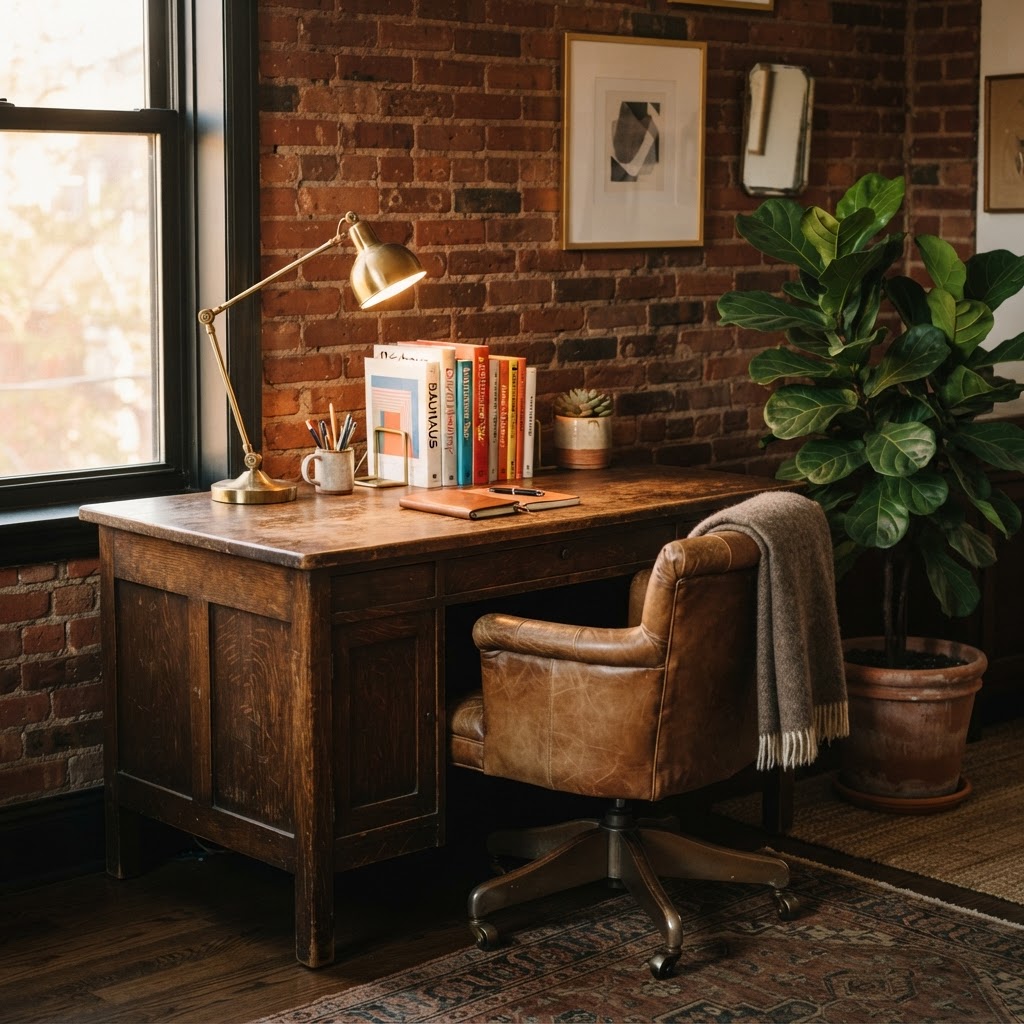
The Myth of the Perfect Desk Setup
The industry around home office design has convinced us that productivity is a purchase — the right desk, the right monitor, the right lamp. But a beautifully appointed office that you avoid working in is not productive. It is an expensive room.
Real productivity comes from a space that supports the work, not the image of work. A modest desk in a quiet corner where you consistently do deep thinking is infinitely more productive than a thousand-dollar setup where you scroll and snack.
The best home office is not the one that looks like a workspace. It is the one that acts like one.
Separation: Why Your Brain Needs Boundaries
The single most important principle of home office design is separation. When your workspace is also your dining table, your couch, and your bed, your brain has no clear signal for when work begins and when it ends. The result is work that bleeds into rest and rest that never fully arrives.
Separation does not require a separate room. It requires a consistent location, a clear start ritual, and a clear end ritual. The same desk, the same chair, the same lamp turned on at the start and off at the end. These cues train the brain to enter work mode and, just as importantly, to leave it.
The Three Zones: Deep Work, Quick Tasks, Reference
A productive office serves different kinds of work, and the space should reflect that. Rather than one undifferentiated surface, think in zones:
The deep work zone is where focused, uninterrupted thinking happens. It should be visually quiet, free of notifications, and arranged so that the only objects in view relate to the task at hand.
The quick-task zone handles email, scheduling, and administrative work. It can tolerate more stimulation and is often better positioned near a window or in a more active part of the room.
The reference zone holds books, files, and materials. It should be accessible but not visually dominant — a shelf behind you, not a wall of binders in your sightline.