
Vol. 1 · No. 36 · FreeSeptember 4

THE COUNTIO CHRONICLE

The World's Growing Library of Actionable Knowledge
Home·Guide·Home Ownership
Intermediate6 min read

July 2026 · Volume 1 · Issue 29

Preventing Water Damage Before It Starts

Water is patient. It finds the smallest gap and does not stop. Left unchecked, a slow drip becomes a collapsed ceiling and a mould problem that costs thousands.

Written By The Countio Chronicle Editorial Team

Published July 18, 2026
water damage preventionplumbing maintenanceleak detectionappliance maintenancefrozen pipesgutter maintenancehome maintenance

Water is patient. It finds the smallest gap, the tiniest crack, the loosest connection. And it does not stop. Left unchecked, a slow drip behind a wall becomes a collapsed ceiling, a warped floor, a mould problem that costs thousands to remediate. Water damage is the single most common and most expensive home insurance claim — and the vast majority of it is preventable.

Preventing Water Damage Before It Starts

Where Water Finds a Way

Water enters homes through a predictable set of vulnerabilities. Knowing them is the first step in prevention.

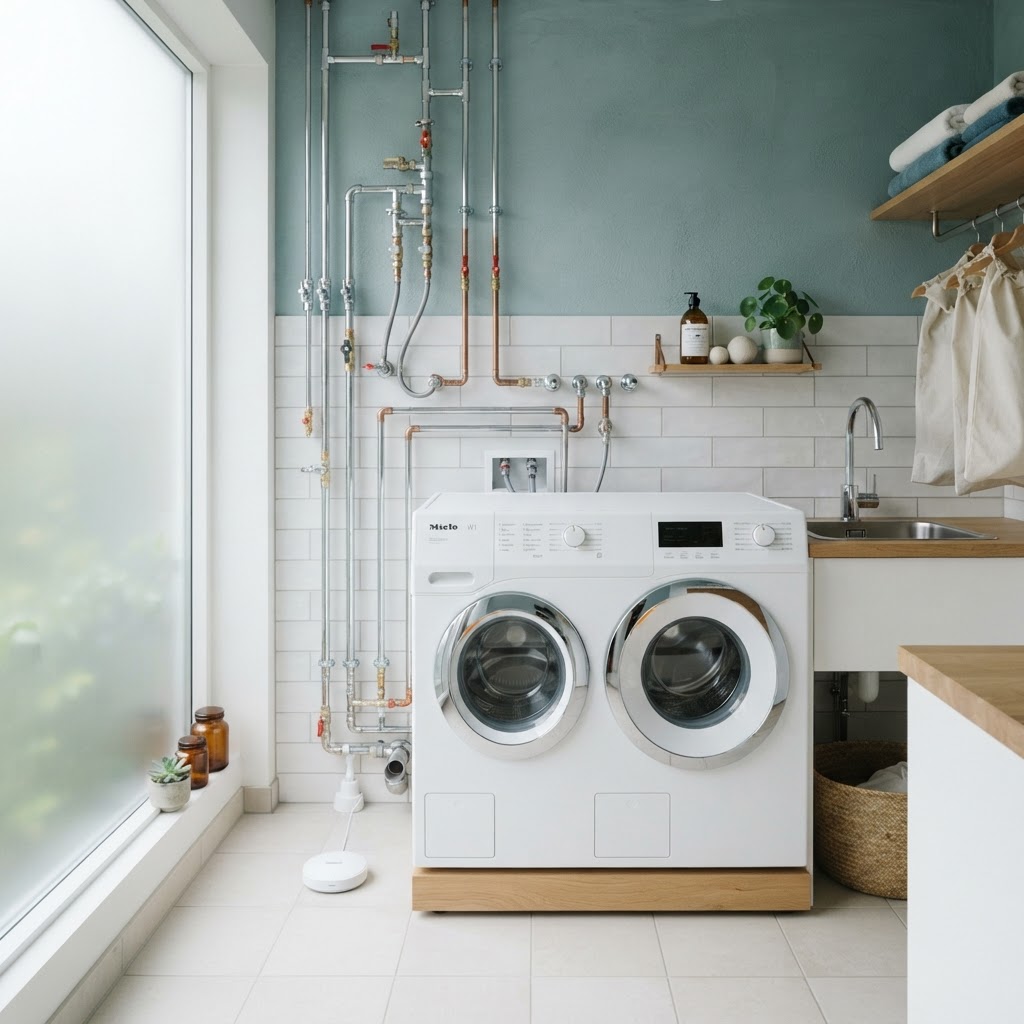
  • Appliance hoses: Washing machines, dishwashers, and refrigerator ice makers. These hoses are under constant pressure and fail without warning. Replace rubber hoses with braided stainless steel lines every five years.
  • Roof penetrations: Anything that passes through the roof — chimneys, vents, skylights — is a potential leak point. The flashing around these penetrations is the usual culprit.
  • Window and door seals: Caulking degrades over time. Wind-driven rain finds the gap.
  • Plumbing connections: The joints under sinks, behind toilets, and at the water heater. A slow drip here can run for months behind a wall before it becomes visible.
  • Foundation cracks: Groundwater enters through the smallest openings, especially during heavy rain or snowmelt.
  • Gutter overflow: Clogged gutters send water cascading down the exterior wall, where it finds its way into the foundation.

The Appliance Audit

Every water-connected appliance in your home is a potential flood source. Audit them annually — it takes less than an hour and prevents the majority of water damage claims.

  • Replace washing machine hoses with braided stainless steel — check for bulging, cracking, or corrosion at the connections.
  • Inspect the dishwasher supply line and drain hose — look for kinks, cracks, or moisture.
  • Check the refrigerator ice maker line — these small, thin tubes are a common failure point.
  • Inspect the water heater for rust, moisture at the base, and a functioning pressure relief valve.
  • Check all shut-off valves — they should turn freely. A stuck valve is useless in an emergency.
  • Look under every sink for moisture, mineral deposits, or warped cabinet bottoms.
A braided steel hose costs twenty dollars. The floor it protects costs thousands. This is not a difficult calculation.

Seasonal Vulnerabilities

Water damage has a seasonal pattern, and prevention should follow it.

In winter, the risk is frozen pipes. Insulate any plumbing that runs through unheated spaces — crawl spaces, exterior walls, garages. During extreme cold, let faucets drip slightly to keep water moving. If you leave for winter, shut off the main water supply and drain the system.

In spring, the risk is snowmelt and rain. Clean gutters before the spring rains. Check that downspouts direct water at least a metre from the foundation. Inspect the sump pump — test it by pouring water into the pit and confirming it activates.

In summer, the risk shifts to appliance failure — more household activity means more strain on plumbing. Check hoses, connections, and water pressure. High pressure stresses the entire system; install a pressure regulator if your reading exceeds 80 psi.

In autumn, the risk is gutter overflow and foundation seepage. Clean gutters after the leaves fall. Grade soil away from the foundation — it should slope at least two centimetres per metre for the first three metres. Seal foundation cracks with hydraulic cement.

Early Detection Technology

Technology has made water damage prevention dramatically more effective. Water leak sensors — small, inexpensive devices placed near appliances and in vulnerable areas — detect moisture before it becomes visible. Some sound an alarm. Others connect to your phone and shut off the main water supply automatically.

Place sensors under the washing machine, dishwasher, water heater, and refrigerator. Add one in the basement near the sump pump. The total cost is under a hundred dollars. The first time one alerts you to a slow leak you didn't know about, it pays for itself ten times over.

For whole-home protection, consider a smart water shutoff valve. These devices monitor flow and pressure, detect anomalies, and shut off the water automatically — even when you are not home. They are not cheap, but neither is a flooded house.

When Prevention Fails

Despite your best efforts, water damage can still occur. What you do in the first hour determines whether it is a minor inconvenience or a major loss.

  • Shut off the main water supply immediately — know where the valve is before you need it.
  • Turn off electricity to affected areas — water and wiring are a lethal combination.
  • Remove what you can — furniture, rugs, and belongings should be moved out of standing water.
  • Begin drying immediately — fans, dehumidifiers, and open windows. Mould begins growing within 24 to 48 hours.
  • Document everything — photograph the damage before you start cleaning up.
  • Call your insurance company — understand what is covered before you authorise repairs.

Water damage is preventable, but not always. What is always within your control is how quickly you respond. The homeowner who shuts off the water in thirty seconds has a damp floor. The one who takes thirty minutes has a flooded house. The difference is not luck — it is preparation. Know where your shut-off valve is. Keep sensors in the right places. And act, the moment you see water where it should not be.