
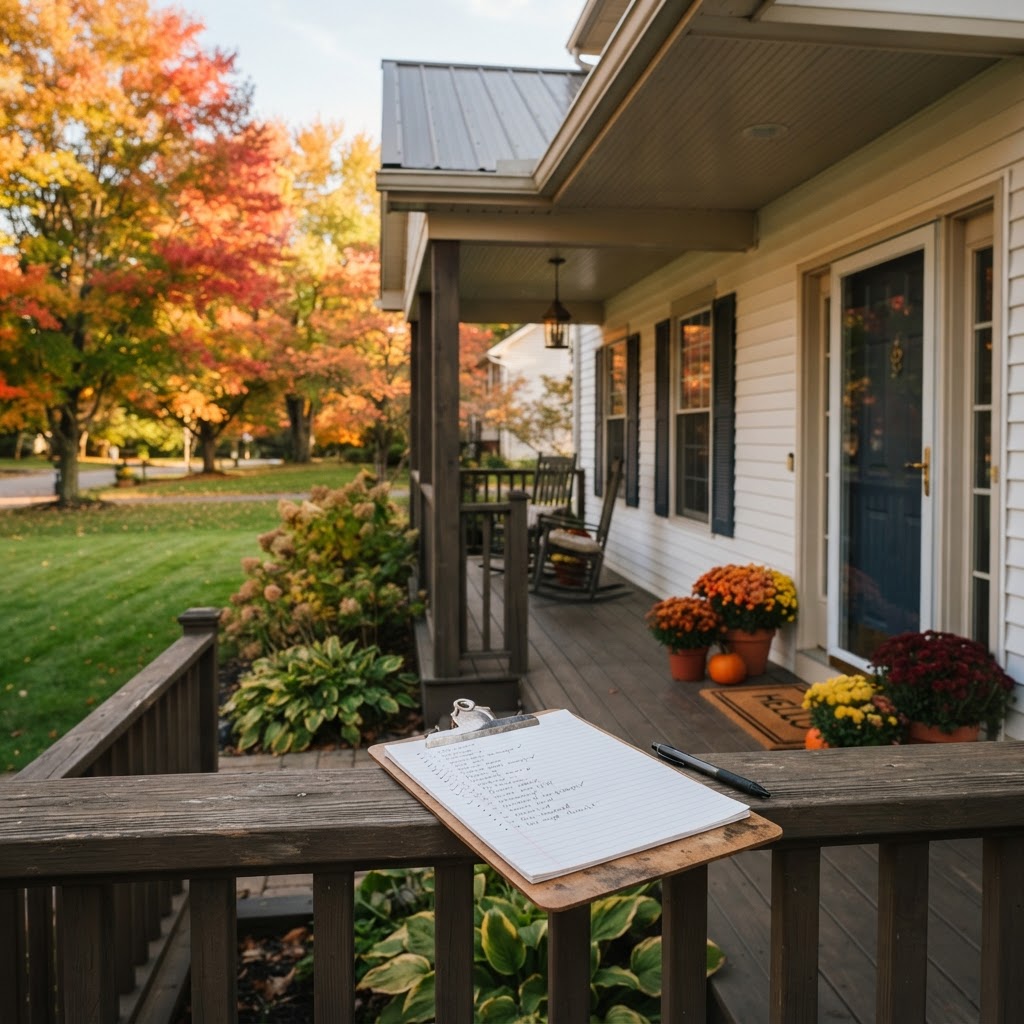
Exterior: Roof, Walls, Foundation
The exterior is your home's first line of defence against the elements. Inspect it methodically, from the top down.
From the ground, examine the roof with binoculars. Look for lifted, cracked, or missing shingles. Check the flashing around chimneys and vents — if it is lifted or corroded, water is getting in. Look for sagging ridges, which indicate structural issues beneath.
Walk the perimeter. Check siding for cracks, warping, or areas where it has pulled away from the wall. Look at the paint — peeling or blistering indicates moisture is trapped behind the surface. Inspect the foundation for new cracks. Mark any you find with tape and a date, and monitor them over time. Active cracks grow; dormant ones do not.
Check that the soil grades away from the foundation for at least the first metre. Look for standing water after rain — it should drain within hours, not days.
Systems: Plumbing, Electrical, HVAC
Your home's systems are its vital organs. Inspect them with care, and do not hesitate to call a professional for anything beyond a visual check.
Plumbing: Check under every sink for moisture. Look for corrosion on supply lines and shut-off valves. Replace any hose that shows bulging or cracking. Test the water heater's pressure relief valve — place a bucket under the discharge pipe and lift the lever. Water should flow and stop when released. Flush the tank to remove sediment.
Electrical: Test all ground fault circuit interrupter (GFCI) outlets — those in kitchens, bathrooms, and exterior areas. Press the test button; the outlet should lose power. Press reset to restore. Look for discoloured or warm switch plates and outlets — these indicate a problem that needs an electrician. Check your breaker panel — make sure all breakers are labelled and none are tripped.
HVAC: Replace all filters. Clean condenser coils on the outdoor AC unit. Clear debris from around the unit. If your system is more than ten years old, schedule a professional service — efficiency drops with age, and a failing system costs more to run than to maintain.
The inspection does not find every problem. It finds the problems that are visible — and those are the ones you can act on before they become invisible, expensive, and irreversible.
Interior: Walls, Floors, Ceilings
Walk through each room with fresh eyes. You are looking for changes — anything that was not there last year.