
Vol. 1 · No. 42 · FreeOctober 23

THE COUNTIO CHRONICLE

The World's Growing Library of Actionable Knowledge
Home·Guide·Family
Beginner6 min read

July 2026 · Volume 1 · Issue 29

Smoke Detectors, Fire Extinguishers & Home Safety Basics

A smoke detector is the cheapest life insurance you will ever buy. A fire extinguisher is the tool that stands between a kitchen accident and a total loss.

Written By The Countio Chronicle Editorial Team

Published July 18, 2026
smoke detectorsfire extinguishersfire safetyhome safetyescape plankitchen fire preventionfire prevention

A smoke detector is the cheapest life insurance you will ever buy. A fire extinguisher is the tool that stands between a small kitchen accident and a total loss. Together, they form the most fundamental layer of home safety — the one that every household should have, that every household should maintain, and that surprisingly few households get right.

Smoke Detectors, Fire Extinguishers & Home Safety Basics

Smoke Detector Placement and Testing

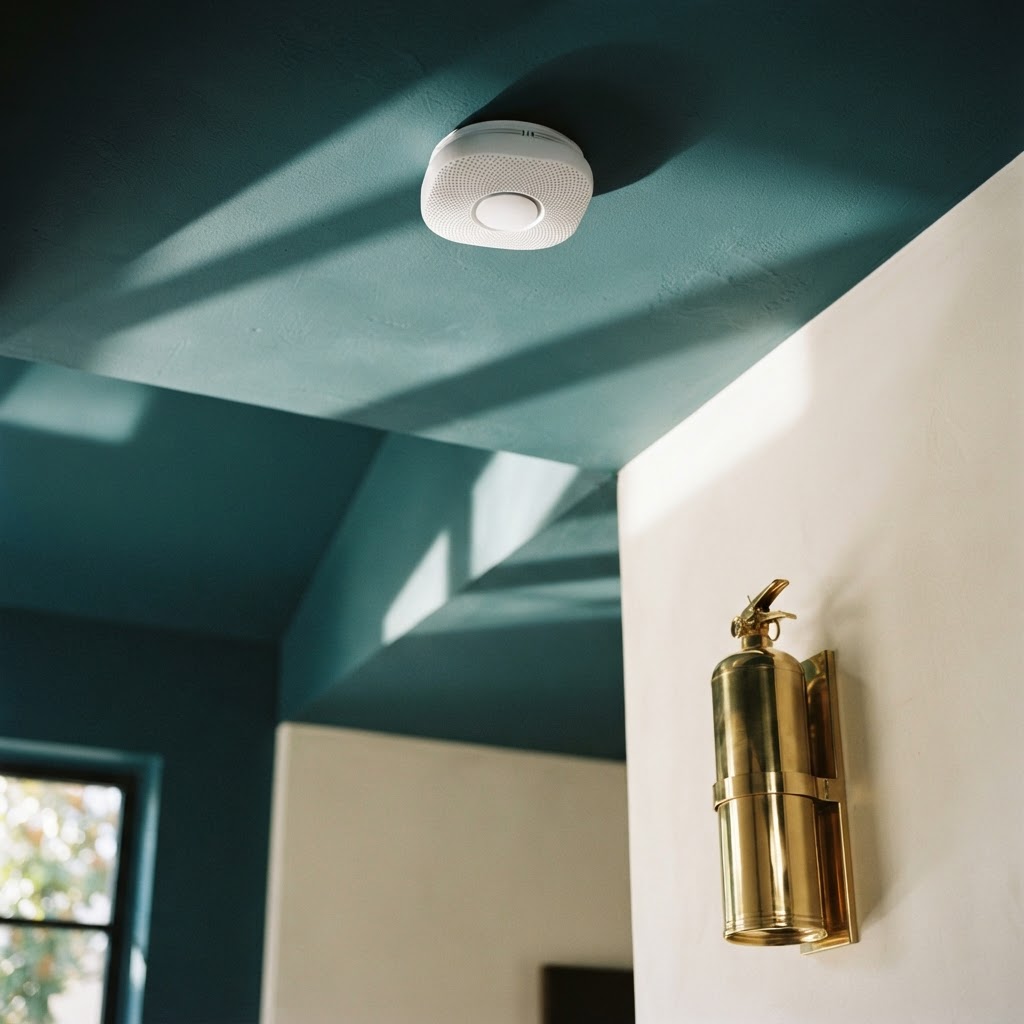
The rule is simple: a smoke detector on every floor, inside each sleeping area, and outside each sleeping area. If your home does not meet this standard, addressing it is the single most important safety improvement you can make.

Placement matters as much as presence. Detectors should be on the ceiling, at least ten centimetres from the wall. If mounted on a wall, they should be between ten and thirty centimetres from the ceiling. Do not place them near windows, doors, or air vents — drafts can prevent smoke from reaching the sensor. In kitchens, place the detector at least three metres from the cooking appliance to reduce false alarms.

Testing is non-negotiable. Press the test button on every detector once a month. It takes thirty seconds. Replace batteries annually — or install ten-year sealed lithium detectors, which eliminate the battery replacement entirely. Replace the entire unit every ten years, regardless of whether it seems to work. The sensors degrade, and a ten-year-old detector is a false sense of security.

Choosing Fire Extinguishers

Not all fire extinguishers are the same. The type you need depends on the fire you are likely to fight, and the right choice can save your home — or your life.

  • Class A: Ordinary combustibles — wood, paper, cloth. The baseline for any home extinguisher.
  • Class B: Flammable liquids — grease, oil, petrol. Essential for kitchens and garages.
  • Class C: Electrical fires. Required anywhere there are appliances and wiring.

For most homes, an ABC-rated extinguisher is the right choice — it covers all three. Keep one in the kitchen, one near the sleeping areas, and one in the garage if you have one. Mount them on brackets, not buried in cabinets. An extinguisher you cannot find in three seconds is useless.

Check the pressure gauge monthly — the needle should be in the green. Replace or recharge if it is not. Know the expiration date and respect it.

The extinguisher is not for fighting a fire. It is for buying you the thirty seconds you need to leave.

Escape Routes and Meeting Points

Every room should have two ways out. For most rooms, that means a door and a window. If the window is on a second floor, a fire escape ladder should be stored nearby. Practice using it — not during a fire, but now, while there is time to learn.

Designate a meeting point outside — a tree, a mailbox, a neighbour's driveway. Everyone in the household should know to go there and stay there. This is how you account for everyone in the chaos of an evacuation. The fire department's first question will be: is everyone out? You should be able to answer with certainty.

Practice the escape twice a year. Once in daylight, once in darkness. The second practice matters most — most fatal fires occur at night, and navigating a smoke-filled hallway in the dark is a skill that must be rehearsed, not improvised.

Kitchen Fire Prevention

The kitchen is the most common origin of house fires. Most are preventable, and most begin with grease.

  • Never leave cooking oil unattended — it takes seconds for oil to reach its flash point.
  • Keep a lid or baking sheet within reach — sliding it over a pan fire smothers it instantly.
  • Never put water on a grease fire — it causes an explosion of flaming oil.
  • Keep dish towels and packaging away from the stovetop.
  • Clean the range hood filter regularly — grease buildup is a fuel source.
  • If a fire starts and you cannot control it in thirty seconds, leave and call emergency services.

Teaching the Household

Safety equipment only works if everyone in the household knows it exists, where it is, and how to use it. This includes children — age-appropriate, not frightening, but clear. A four-year-old can learn the meeting point. A seven-year-old can learn how to test a smoke detector. A twelve-year-old can learn how to use a fire extinguisher.

Make safety a household conversation, not a hidden agenda. Show everyone where the extinguishers are. Walk the escape routes together. Let children press the test buttons. Normalise it, so that in an emergency, the response is instinctive rather than panicked.

The basics are not complicated. A detector on every floor. An extinguisher in the kitchen. An escape plan practiced twice a year. These are small, inexpensive, and unglamorous. They are also the difference, in the worst moment of your life, between a story you tell and a tragedy you cannot undo.

Continue Your Planning