
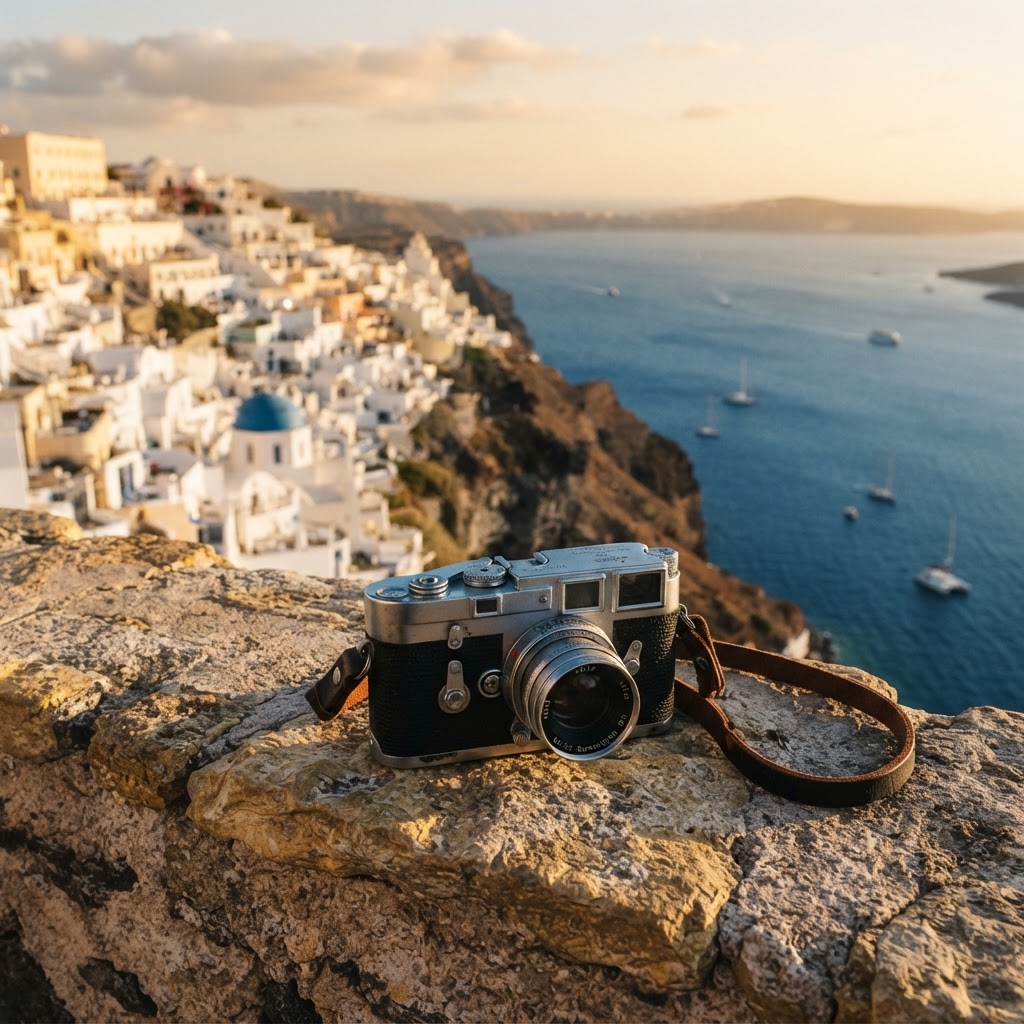
The Photographer's Dilemma
There is a tension at the heart of travel photography. The camera allows you to capture moments, but it also distances you from them. The traveler who experiences everything through a viewfinder sees the world as photographs, not as experiences. They return home with a full camera roll and empty memories — images of moments they were present for but never truly inhabited.
The goal of travel photography is not to document everything. It is to capture enough to remember, while remaining present enough to experience. This balance is not easy, but it is essential. The best travel photographs are taken by people who were there first and photographers second.
The best travel photograph is one that reminds you of an experience, not one that replaces it.
Presence Over Capture
The first principle of meaningful travel photography is that presence comes before capture. Experience the moment fully, then decide whether to photograph it. This seems simple, but it requires resisting the reflex to reach for the camera the moment something interesting happens. The instinct to capture is often the enemy of the experience itself.
This does not mean you should not photograph. It means you should photograph deliberately. Choose what is worth capturing. Take the time to compose rather than snapping reflexively. And then put the camera away and be present. A few thoughtful photographs will mean more to you in ten years than a thousand impulsive ones.
Photograph What You Feel
Most travel photography focuses on what places look like. The most powerful travel photographs capture what they feel like. This means photographing not just the landmark but the atmosphere — the light, the mood, the detail that conveys the experience. A photograph of the Eiffel Tower is a postcard. A photograph of the light on the Seine at dusk, with the tower in the distance, is a memory.