
The Weekly Framework
Meal planning does not require elaborate recipes or hours of preparation. It requires a framework — a simple plan for what you will eat during the week, made once, in advance. The most effective approach is to plan dinners for the week, shop once for the ingredients, and prepare what can be prepared ahead. This single act eliminates the six-o'clock scramble — the moment when you are tired, hungry, and faced with an empty kitchen. A plan, even a simple one, transforms that moment from a crisis into a routine.
The best meal is not the most elaborate. It is the one you already decided on.
Build Around Proteins
The easiest way to plan meals is to start with protein. Choose three or four proteins for the week — chicken, fish, eggs, beans — and build meals around them. Protein is the anchor of a meal; once it is chosen, the vegetables, grains, and fats follow naturally. This approach simplifies shopping (buy proteins in bulk), reduces waste (proteins are used efficiently), and ensures that every meal has the satiating, metabolism-supporting element that many quick meals lack.
Batch and Repurpose
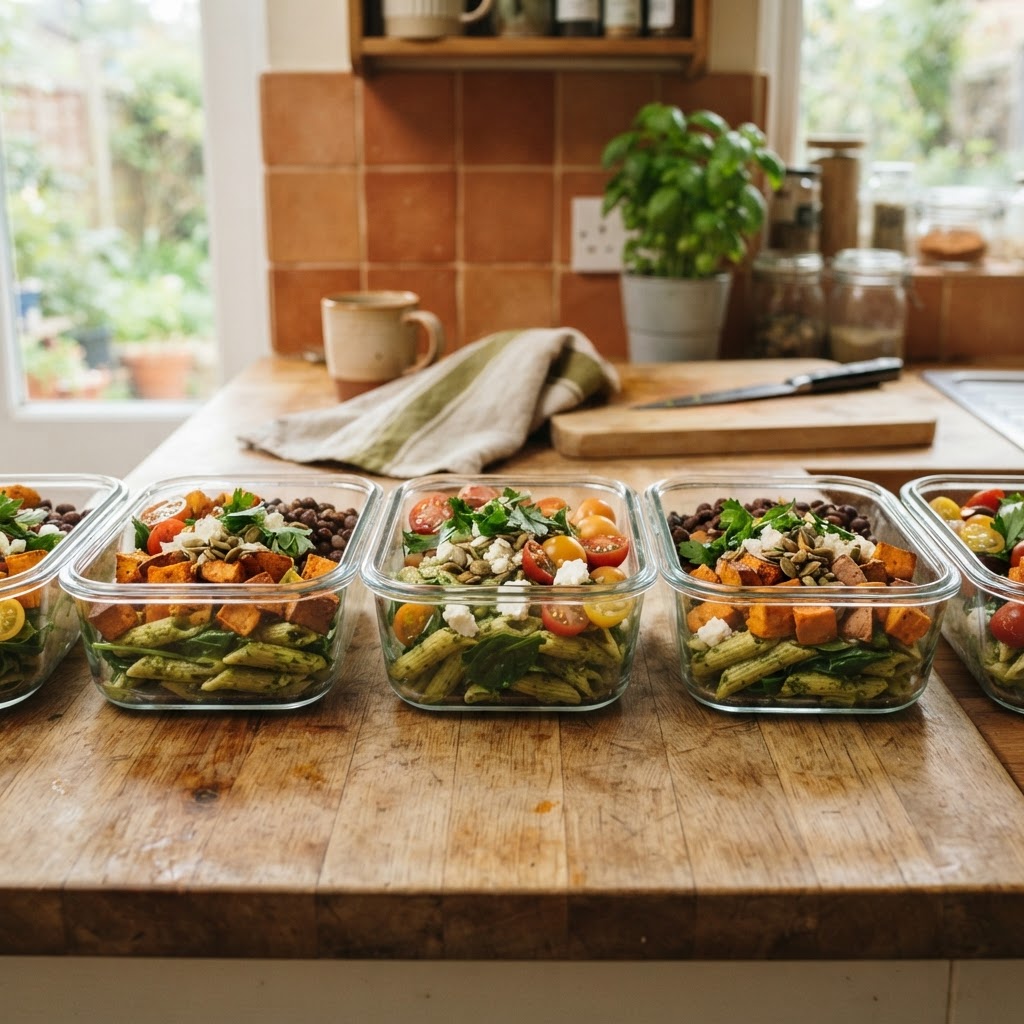
Cooking once and eating multiple times is the secret weapon of busy people who eat well. A large batch of roasted vegetables can serve as a side dish, a salad base, and a wrap filling across three meals. A pot of grains — rice, quinoa, farro — can anchor lunches and dinners for days. A roasted protein can be eaten hot one night, cold in a salad the next, and shredded into a soup the third. Batch cooking is not about eating the same meal repeatedly. It is about preparing components that can be combined in different ways, reducing both cooking time and decision load.