
The Habit Loop of Eating
Every eating habit follows a loop: cue, routine, reward. The cue might be a time of day, an emotion, a social setting, or the sight of food. The routine is the eating itself. The reward is the satisfaction, comfort, or pleasure that follows. To change an eating habit, you do not simply remove the routine — that creates a void. You identify the cue and either change it or replace the routine with one that provides a similar reward. Afternoon snacking, for instance, is often driven not by hunger but by the need for a break — a cue that can be satisfied with a walk or a cup of tea rather than food.
You do not break habits. You replace them. The cue remains; the routine changes.
Eating Slowly
One of the most powerful eating habits is also the simplest: eating slowly. The body takes approximately twenty minutes to register fullness. Eating quickly means consuming far more food than needed before the satiety signal arrives. Eating slowly — putting down the fork between bites, chewing thoroughly, pausing — naturally reduces intake without requiring portion control or willpower. It also improves digestion and increases the enjoyment of food. This single habit change, more than any dietary restriction, can transform the quantity and quality of eating.
The Environment of Eating
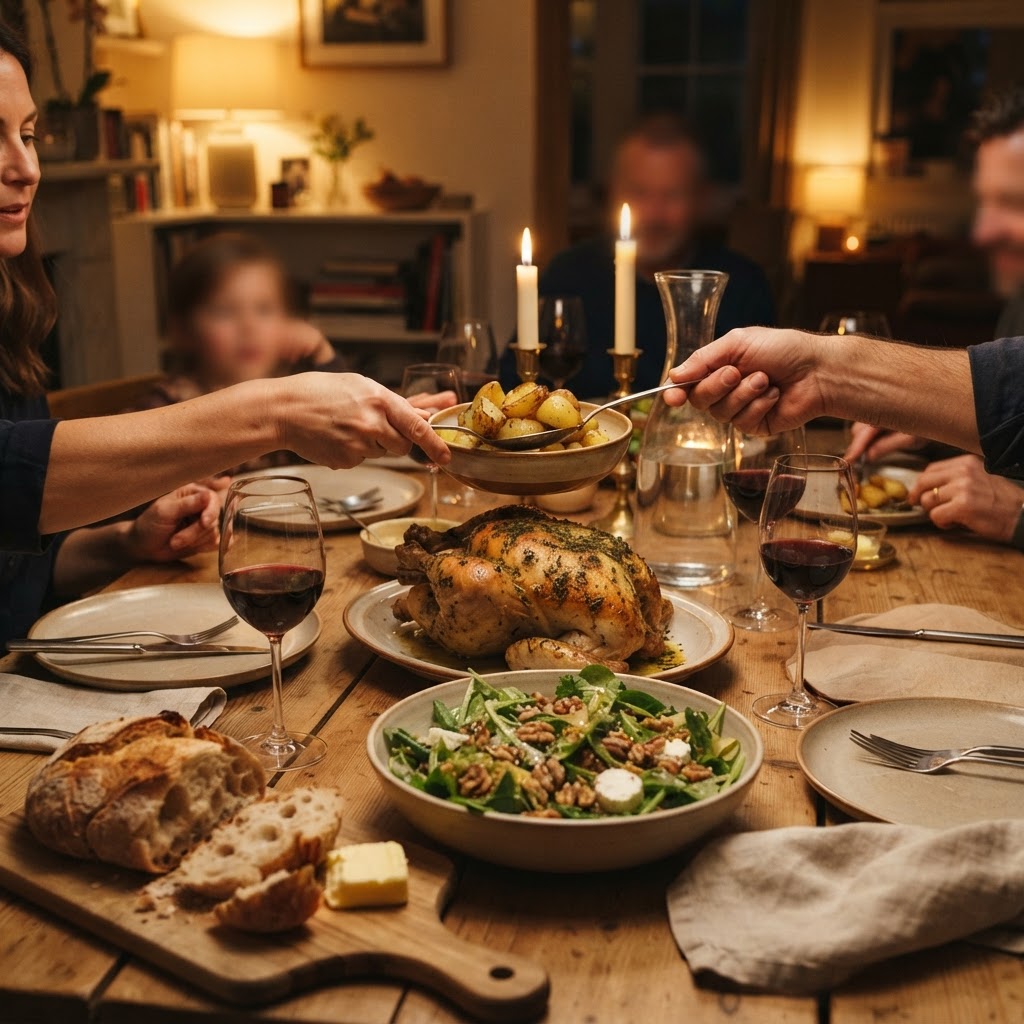
Where and how you eat is as important as what you eat. Eating at a table, without screens, with attention on the food, is associated with better digestion, greater satisfaction, and lower intake. Eating in front of a screen — television, computer, phone — is associated with the opposite: higher intake, lower satisfaction, and no memory of having eaten. The environment of eating is not a minor factor. It is a structural determinant of how much and how well you eat. Redesigning the environment — eating at a table, without distraction — is one of the most effective habit changes available.