
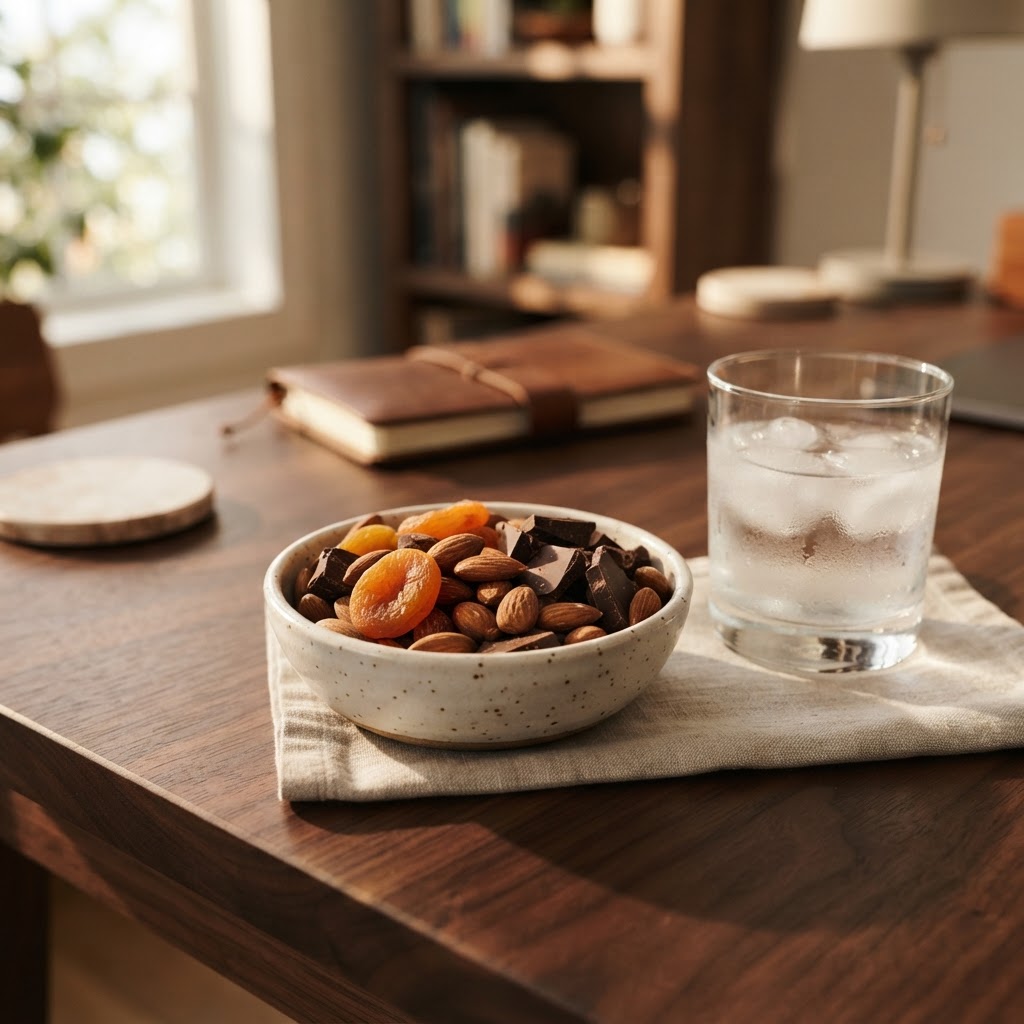
Why We Snack
Hunger between meals is not a failure. It is often a signal — that meals were too small, too low in protein, or too long apart. The three-meal structure that many people aspire to does not work for everyone. Some bodies function better with smaller, more frequent meals. Others need a snack to bridge the gap between lunch and dinner, particularly when lunch is early or dinner is late. The goal is not to eliminate snacking but to make it intentional — a planned part of the day's nutrition rather than a reactive grab at whatever is nearest.
A snack is not a treat. It is a small meal. Design it accordingly.
The Protein and Fiber Formula
The most satisfying snacks combine protein and fiber. Protein provides satiety and supports muscle maintenance. Fiber slows digestion, stabilizes blood sugar, and extends the feeling of fullness. Together, they create a snack that actually satisfies rather than one that merely entertains the mouth for a few minutes. Examples: an apple with almond butter. Greek yogurt with berries. Carrots with hummus. A handful of nuts with dried fruit. These combinations provide sustained energy without the crash that follows a sugary snack.
The Snack Environment
The snacks you eat are largely determined by the snacks you can see. If the pantry is stocked with chips and cookies, those are the snacks you will eat. If the fridge is stocked with cut vegetables, yogurt, and fruit, those become the default. The single most effective step toward healthy snacking is to control the environment — to stock the foods you want to eat and to remove (or at least make less accessible) the ones you do not. Willpower is unreliable. Environment design is not.