
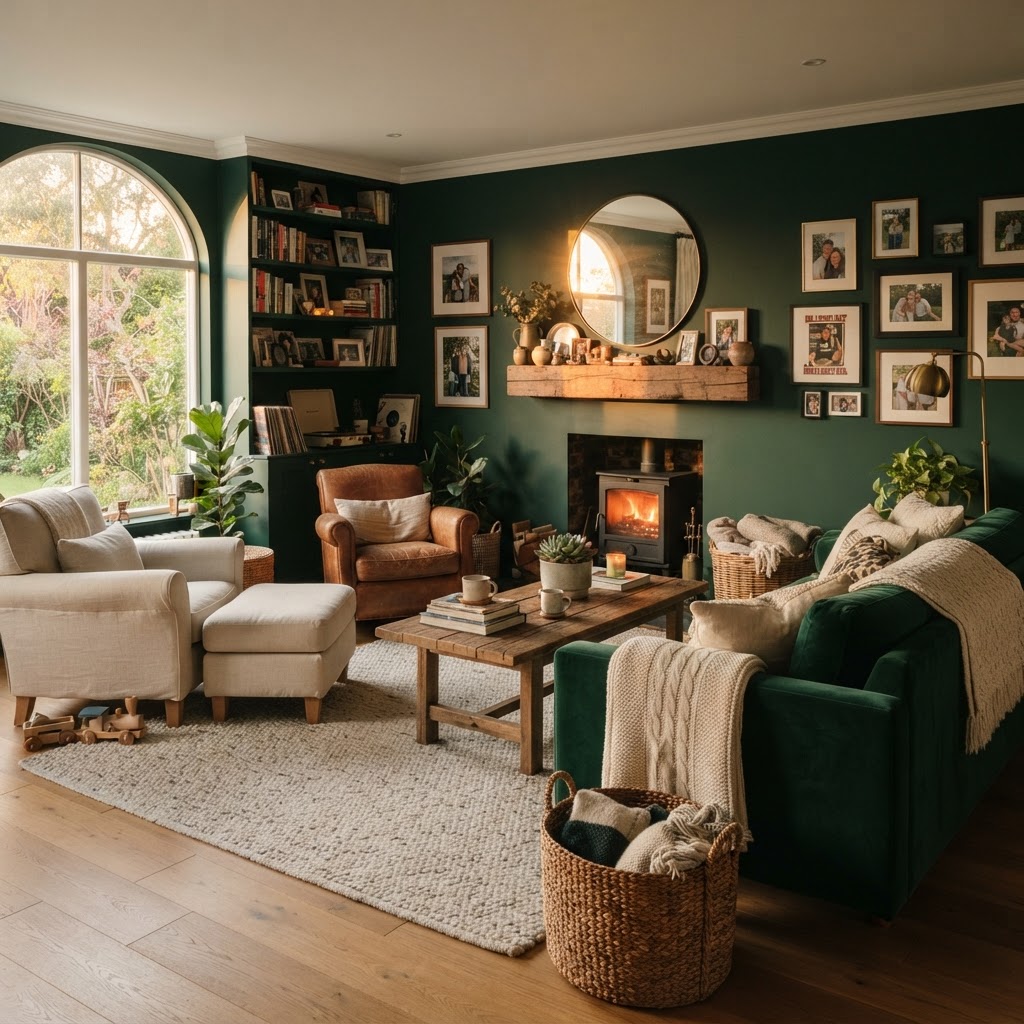
The Space Shapes the Interaction
The most important understanding of shared spaces is that the space shapes the interaction — the physical arrangement of the room influences how the people within it interact, often more powerfully than their intentions. The living room with seating arranged around a television produces interaction oriented toward the screen, with family members facing the same direction rather than each other. The living room with seating arranged for conversation — facing each other, with space for eye contact and exchange — produces interaction oriented toward each other. The kitchen with a table or island that invites gathering produces shared cooking, incidental conversation, and connection. The kitchen designed for a single cook, without space for others, produces isolation. These effects are not occasional. They are constant, operating every time the space is used, and their cumulative impact on the family's interaction is enormous. The shared space, then, is not a neutral container. It is an active shaper of the interaction that occurs within it, and the family that understands this — that designs their shared spaces with awareness of how the space will shape the interaction — creates environments that support, rather than undermine, the connection and comfort that the family's shared life depends on.
The room does not just hold the family. It shapes the family. The space that invites gathering produces gathering. The space that isolates produces isolation. The design, not the intention, determines the outcome.
Comfort as Foundation
The foundation of a comfortable shared space is, quite literally, comfort — the physical comfort that invites people to stay, to relax, and to be present. This includes: seating that is genuinely comfortable (not just visually appealing but supportive and inviting), temperature that is appropriate (neither too hot nor too cold, but in the range that allows people to forget about the temperature), lighting that is warm and adjustable (not harsh or exclusively overhead, but layered, with options for different activities and times), and acoustics that are pleasant (neither too echoey nor too deadened, but with a quality that makes conversation easy and music enjoyable). These elements, which seem mundane, are the foundation of the space's comfort, because the space that is physically uncomfortable — the stiff sofa, the harsh lighting, the cold room, the echoey acoustics — drives people away, regardless of the intention for them to gather. The space that is physically comfortable invites people to stay, to relax, and to be present, and the invitation, accepted consistently, is what transforms the shared space from a room into a place where the family's shared life actually occurs.
The Gathering Configuration
The arrangement of furniture in a shared space — the configuration — is one of the most powerful determinants of how the space is used. The configuration should be designed for the primary purpose of the space, which in a family room is typically connection — conversation, shared activities, and the incidental interaction that occurs when people are in the same space. The connection-supporting configuration includes: seating that faces each other (or at least allows eye contact), enough seating for the whole family, a layout that allows easy movement and interaction, and a focal point that is not exclusively a screen (a fireplace, a view, a piece of art, or a coffee table that invites gathering). The configuration should also accommodate different uses — the conversation, the shared movie, the solo reading — through flexibility that allows the space to serve multiple functions without requiring rearrangement. The gathering configuration, designed intentionally, makes the space naturally conducive to the gathering that is its purpose, and the conduciveness, maintained through the design, produces the gathering consistently, without requiring the intention or effort that a poorly configured space would demand.