
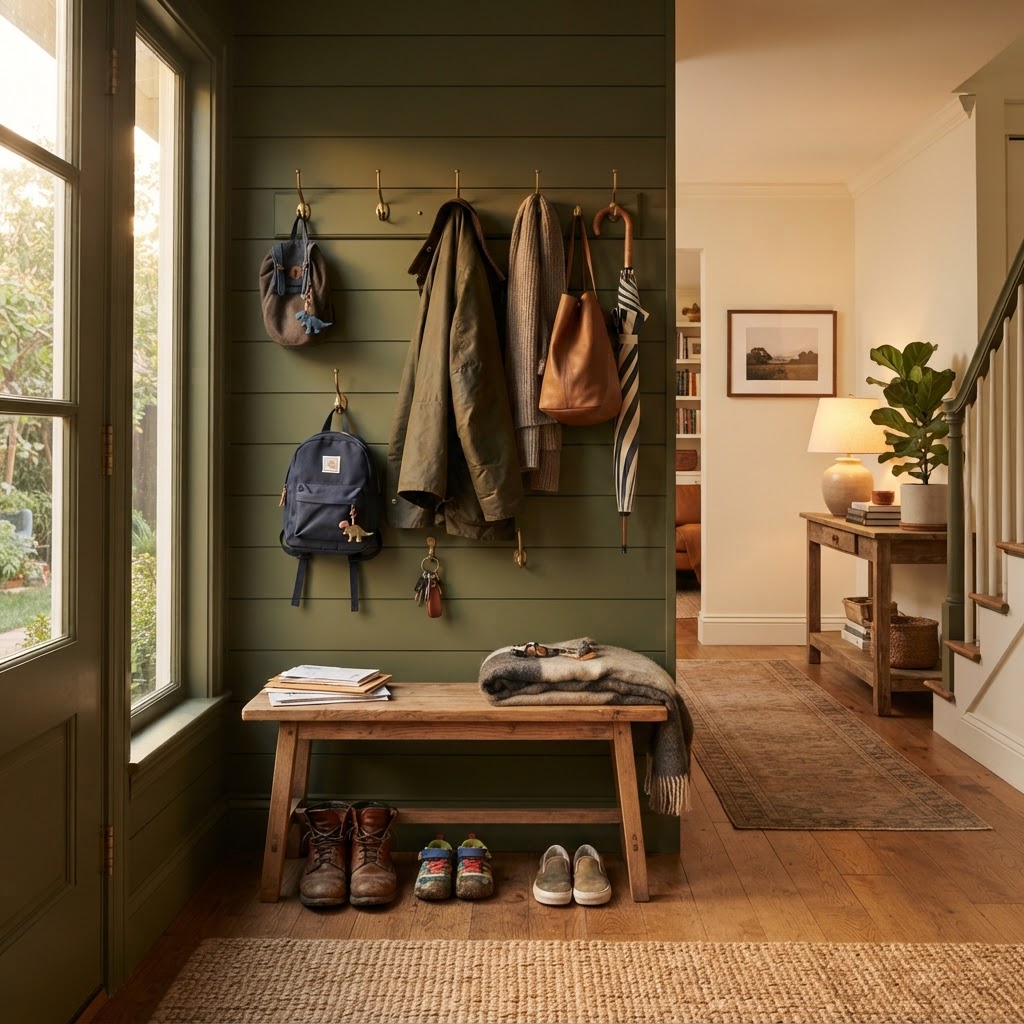
The Environment as a Participant
The physical environment is not a neutral container for family life. It is an active participant, shaping the interactions, moods, and behaviors that occur within it. A home with a kitchen that invites gathering — an island with stools, a table nearby, space for multiple people to be present — produces more shared cooking, more conversation, more incidental connection than a kitchen designed for a single cook. A home with a living room arranged for conversation — seating facing each other, no screen dominating the space — produces more interaction than one arranged around a television. A home with clear surfaces and organized storage produces less friction, fewer arguments about clutter, and more mental bandwidth for connection than one where disorder is a constant source of stress. These effects are not occasional. They are continuous, operating every hour of every day, and their cumulative impact on family life is enormous. The home that supports family life is designed with this awareness — recognizing that the environment is not separate from the life but a shaper of it.
Your home is not where your family lives. It is how your family lives. The environment shapes the interactions, the moods, and the connections — every day, without asking.
Gathering Spaces
The most important element of a home that supports family life is the gathering space — the place or places where family members naturally come together. This space, typically the kitchen or living room, should be designed to invite and support gathering: comfortable seating, enough space for the whole family, a layout that allows multiple people to be present simultaneously, and an atmosphere that makes the space feel welcoming rather than formal. The gathering space should be the heart of the home — the place where family members gravitate, where incidental connection happens, and where the shared life of the family is most visible. The home without a gathering space — where each family member retreats to a separate room, where the common areas are uninviting, or where the layout discourages lingering — fragments the family, reducing the incidental contact that builds closeness. The gathering space, however simple, is what brings the family together, and its design — intentional or not — shapes the frequency and quality of the gatherings.
Organization That Reduces Friction
Beyond gathering spaces, the organization of the home has a significant impact on family life. A disorganized home — where belongings are scattered, storage is inadequate, and finding things requires constant searching — creates friction that accumulates throughout the day: the morning rush made more stressful by missing items, the evening compromised by clutter, the weekend consumed by catching up on tasks that organization would have prevented. This friction, while individually small, has a cumulative effect on family mood and relationships — the constantly stressed household is not a household where connection thrives. An organized home, by contrast, reduces this friction: belongings have designated places, storage is adequate and accessible, and the daily flow of the household is smooth rather than chaotic. The organization does not need to be pristine. It needs to be functional — adequate storage for the family's belongings, systems that keep essential items accessible, and a level of order that reduces rather than creates stress.