
Vol. 1 · No. 37 · FreeSeptember 9

THE COUNTIO CHRONICLE

The World's Growing Library of Actionable Knowledge
Travel·Practical Guide·Travel
Beginner7 min read

July 2026 · Volume 1 · Issue 29

Airport Security Without the Stress

Airport security stress is almost entirely preventable. Learn the system, prepare before the belt, and turn the most dreaded part of travel into a non-event.

Published July 18, 2026
airport securitytravel tipsairport tipsflight preparation

Airport security is the most universally dreaded part of air travel, yet it is also the most preventable source of stress. The anxiety comes not from the process — which is straightforward — but from the chaos of travelers who have not prepared. The traveler who understands the system glides through. The traveler who does not becomes the holdup.

Airport Security Without the Stress

The Security Line Is Not Your Enemy

Airport security is the most universally dreaded part of air travel. It is also the most preventable source of stress. The anxiety comes not from the process itself — which is straightforward — but from the chaos of travelers who have not prepared for it. The traveler who understands the system moves through security with ease. The traveler who does not becomes the chaos.

The principle is simple: security screening is a predictable process with known requirements. The more you prepare before reaching the conveyor belt, the faster and smoother the process becomes. Preparation is not just about speed — it is about dignity. The traveler who fumbles at the checkpoint draws attention, holds up the line, and starts their trip with stress.

The difference between a smooth security experience and a stressful one is two minutes of preparation before you reach the belt.

Before You Reach the Belt

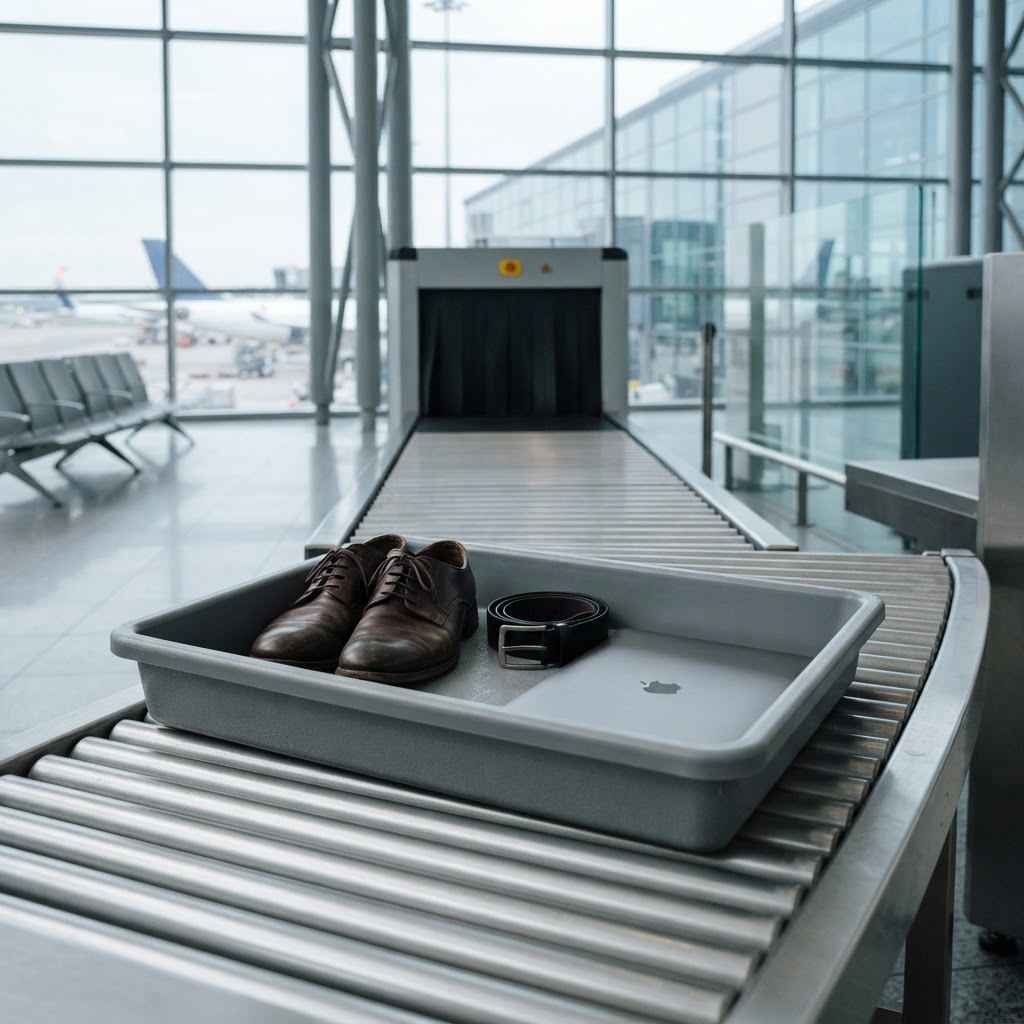
Prepare while you are still in line, not when you reach the belt. Remove your belt, jacket, and any metal items and place them in your carry-on before you reach the bins. Have your liquids bag accessible — not buried at the bottom of your bag. If you are carrying a laptop or large electronics, have them in an easily accessible section.

Wear travel-friendly clothing. Slip-on shoes avoid the awkward balancing act of untying laces while holding a bin. Minimal jewelry means fewer items to remove and replace. Layered clothing that is easy to remove and put back on streamlines the process. These choices, made when dressing for travel, pay dividends at every checkpoint.

Know the Rules

Security rules vary by country and airport, but the basics are consistent. Liquids must be in containers of 100ml or less, placed in a clear, resealable bag. Laptops and large electronics must be removed from bags in most airports. Shoes must be removed in some countries but not others. Belts, jackets, and items containing metal must be removed.

Research specific requirements for your departure airport and destination. Some airports have different rules for different terminals. Some offer expedited screening programs that reduce the requirements. Knowing what to expect eliminates the surprise that causes hesitation and delay.

Security rules are not obstacles. They are instructions. Follow them, and the process becomes routine.

Mindset Matters

The way you approach security shapes the experience. If you view it as an obstacle to be endured, it will feel like one. If you view it as a straightforward process with known steps, it becomes routine. The anxiety that surrounds security is disproportionate to the actual difficulty — it is a few minutes of organized activity, not an interrogation.

Be patient with other travelers, particularly those who are less familiar with the process. The traveler who is obviously stressed is often a first-time flyer or someone from a country with different security norms. Kindness costs nothing and makes the environment better for everyone. Security is a shared experience — your preparation helps not just you but everyone behind you in line.

Airport security, properly approached, is a five-minute inconvenience that protects every passenger on every flight. Prepare for it, move through it efficiently, and let it be the non-event it should be — rather than the stressful start to a trip that it too often becomes.