
Vol. 1 · No. 37 · FreeSeptember 9

THE COUNTIO CHRONICLE

The World's Growing Library of Actionable Knowledge
Travel·Practical Guide·Travel
Beginner7 min read

July 2026 · Volume 1 · Issue 29

Preparing for Long-Haul Flights

A long-haul flight is an endurance event, not a passive experience. Prepare physically, mentally, and practically to arrive functional, not depleted.

Published July 18, 2026
long-haul flightflight tipstravel preparationairplane comfort

A long-haul flight is not transportation — it is an endurance event. Ten hours in a pressurized cabin at altitude, with dry air, limited movement, and disrupted sleep. The traveler who treats it as a passive experience arrives depleted. The traveler who prepares for it as an event to be managed arrives ready to begin their trip.

Preparing for Long-Haul Flights

Long Flays Are Endurance Events

A long-haul flight is not a journey — it is an endurance event. Ten, twelve, fifteen hours in a pressurized metal tube at 35,000 feet. The body is not designed for this. The mind is not designed for this. The traveler who treats a long-haul flight as a passive experience — sitting, waiting, enduring — arrives depleted. The traveler who prepares for it as an event to be managed arrives ready.

Preparation for a long-haul flight is physical, mental, and practical. Each dimension matters, and neglecting any one of them turns a manageable journey into an ordeal. The goal is not to make a long flight pleasant — that is rarely achievable. The goal is to make it survivable, and to arrive with enough energy to begin your trip rather than needing a day to recover.

You cannot make a long flight comfortable. You can make it bearable. The difference is preparation.

Physical Preparation

What you wear and what you carry shapes the physical experience. Dress in layers — cabin temperatures fluctuate, and you cannot control the thermostat. Choose loose, comfortable clothing that does not restrict circulation. Compression socks reduce swelling and lower the risk of deep vein thrombosis on flights longer than four hours.

Hydration is the single most important physical factor. Cabin air is extremely dry, and dehydration exacerbates jet lag, headaches, and fatigue. Drink water regularly — more than you think you need. Avoid alcohol and excessive caffeine, which dehydrate and disrupt sleep. Bring an empty water bottle through security and fill it before boarding.

Mental Preparation

Twelve hours is a long time to fill. Plan your entertainment in advance — not just one movie, but enough content to fill the entire flight. Download films, shows, books, and podcasts to your devices. Do not rely on in-flight entertainment systems, which may be broken or limited. Bring noise-canceling headphones — they are the single most impactful item for long-haul comfort.

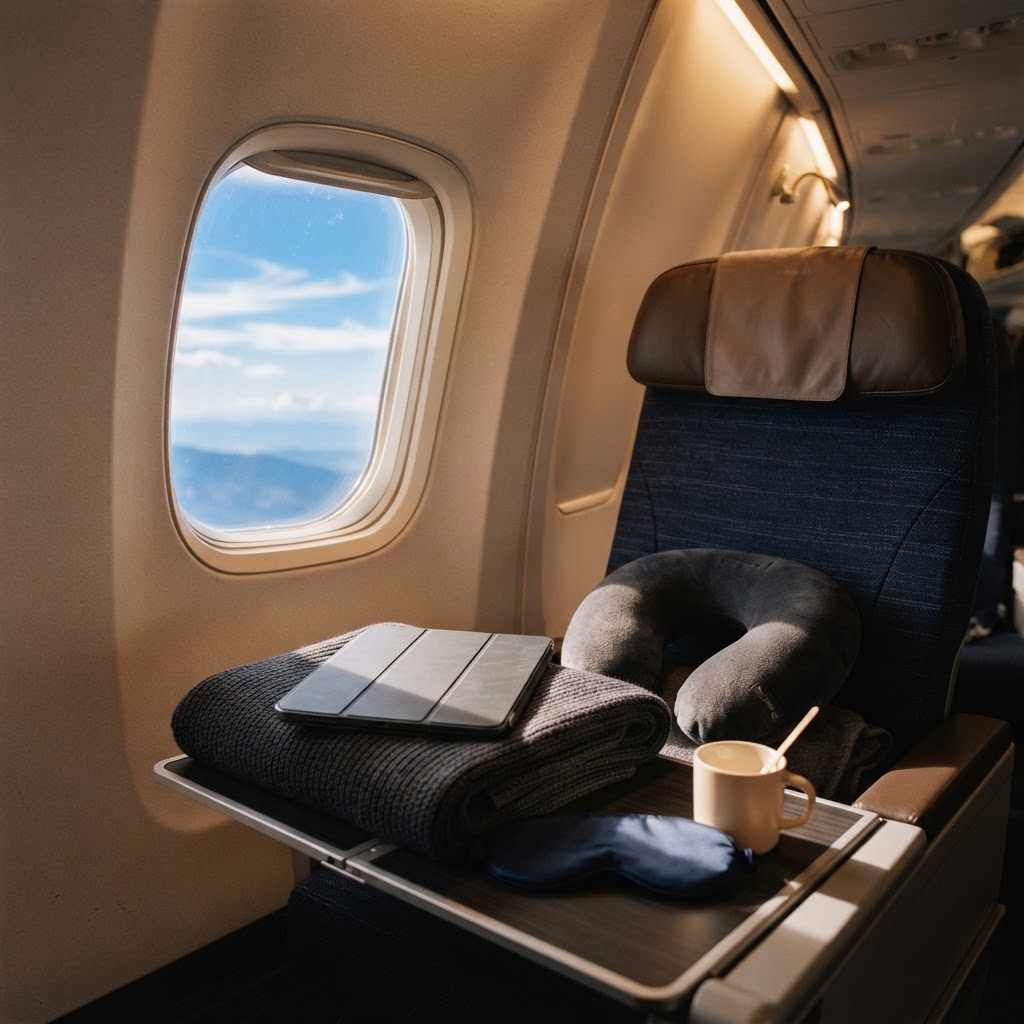
Plan for sleep, but do not force it. If you are flying overnight and want to adjust to the destination time zone, create conditions for rest: eye mask, earplugs or headphones, neck pillow, blanket. But accept that airplane sleep is different from real sleep. Any rest is beneficial, even if it is not the full night you hoped for.

The goal of a long flight is not to enjoy it. The goal is to arrive with enough energy to enjoy what comes after.

The Practical Details

Choose your seat strategically. Aisle seats offer mobility — you can stand, stretch, and use the restroom without disturbing others. Window seats offer a surface to lean against and fewer disturbances. Avoid middle seats if possible. Consider upgrading for long-haul flights — the extra legroom or recline can be worth the cost on a twelve-hour journey.

Move regularly. Stand, stretch, and walk the aisle every few hours. This prevents stiffness, reduces swelling, and lowers the risk of circulation problems. Do simple exercises in your seat — ankle rotations, shoulder rolls, neck stretches. These movements seem insignificant, but they compound over many hours and make a measurable difference in how you feel on arrival.

A long-haul flight, properly prepared for, is a manageable event rather than an ordeal. You will not arrive refreshed — no one does after twelve hours in the air. But you can arrive functional, and functional is enough to begin the journey that the flight was merely transportation for.