
Vol. 1 · No. 36 · FreeAugust 31

THE COUNTIO CHRONICLE

The World's Growing Library of Actionable Knowledge
Travel·Practical Guide·Travel
Beginner7 min read

July 2026 · Volume 1 · Issue 29

Packing Smarter, Not Heavier

Packing smarter is not about deprivation — it is about intention. Learn the system, the rule of three, and what to leave behind.

Published July 18, 2026
packing tipstravel preparationminimalist packingtravel essentials

The weight you carry shapes the journey you have. A heavy suitcase slows you down, limits your mobility, and turns every staircase and transit transfer into an ordeal. The traveler who packs smart does not suffer these constraints — they move freely, adapt easily, and arrive with energy rather than exhaustion.

Packing Smarter, Not Heavier

The Philosophy of Less

Packing is the most overthought part of travel preparation. The instinct is to pack for every possibility — every weather scenario, every activity, every outfit. The result is a suitcase that is heavy, disorganized, and filled with items that will never be used. The philosophy of packing smarter is not about deprivation. It is about intention.

Every item in your luggage should earn its place. If you cannot articulate why you are bringing it — what specific need it serves — leave it behind. This standard is demanding, but it transforms packing from a anxiety-driven accumulation into a deliberate selection.

The traveler who packs everything brings nothing useful. The traveler who packs deliberately brings everything they need.

Build a System

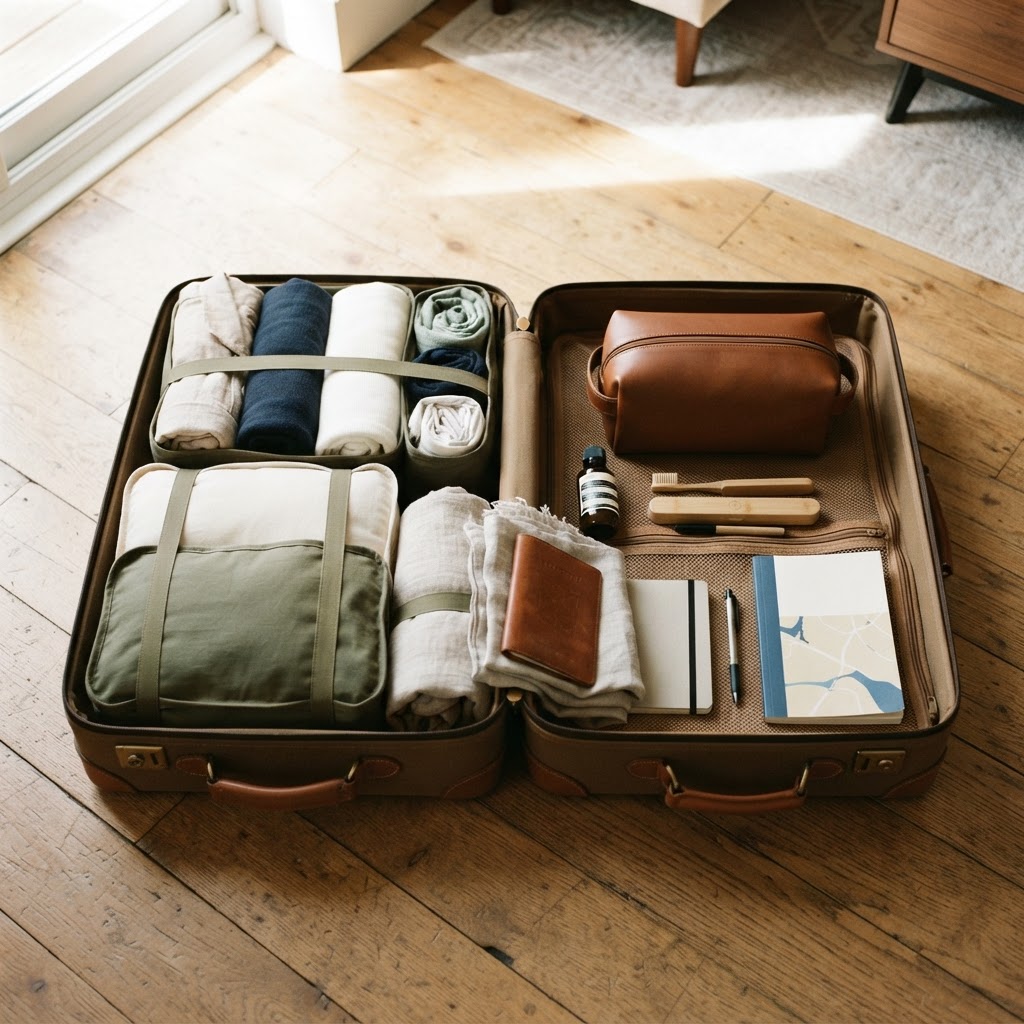
Smart packing is systematic. Rather than throwing items into a bag, organize by category and use packing tools that create structure. Packing cubes keep clothing compressed and separated. Toiletry bags prevent leaks from spreading. A dedicated electronics pouch keeps cables and chargers tangle-free.

The system should be repeatable. When you use the same packing approach every trip, you develop a checklist that lives in your hands rather than your head. You know what goes where, what you need to restock, and what you can leave behind. This consistency is what experienced travelers mean when they say packing becomes effortless — not because they do not think about it, but because they have thought about it once and built a system.

The Rule of Three

A practical framework for clothing is the rule of three: three tops, three bottoms, three pairs of socks and underwear. This gives you enough to rotate, enough to layer, and enough to handle a day of delays. Choose pieces that mix and match, that work in multiple contexts, and that layer rather than bulk.

Focus on fabrics that resist wrinkles, dry quickly, and serve multiple purposes. Merino wool is the traveler's secret weapon — it regulates temperature, resists odor, and can be worn for days without washing. Synthetic blends are lightweight and quick-drying. The goal is versatility: each piece should work in multiple outfits and multiple conditions.

Pack for the trip you are taking, not for the trip you are afraid of.

What to Leave Behind

The most important packing skill is knowing what not to bring. Leave behind the just-in-case items — the things you might need but probably will not. Most destinations have stores. Most hotels have amenities. Most problems have local solutions. Packing for every contingency is not preparedness — it is anxiety in physical form.

Also leave behind the duplicates. You do not need three pairs of shoes for a five-day trip. You do not need a different outfit for every day. You do not need full-size toiletries when travel sizes suffice. Each item you remove lightens your load, simplifies your decisions, and frees up space for the things that matter — including the souvenirs you might bring home.

Packing smarter is ultimately about traveling lighter in every sense. A lighter bag means easier transit, less anxiety, and more energy for the experiences that brought you there. The traveler who packs smart arrives ready to travel, not ready to manage luggage.