
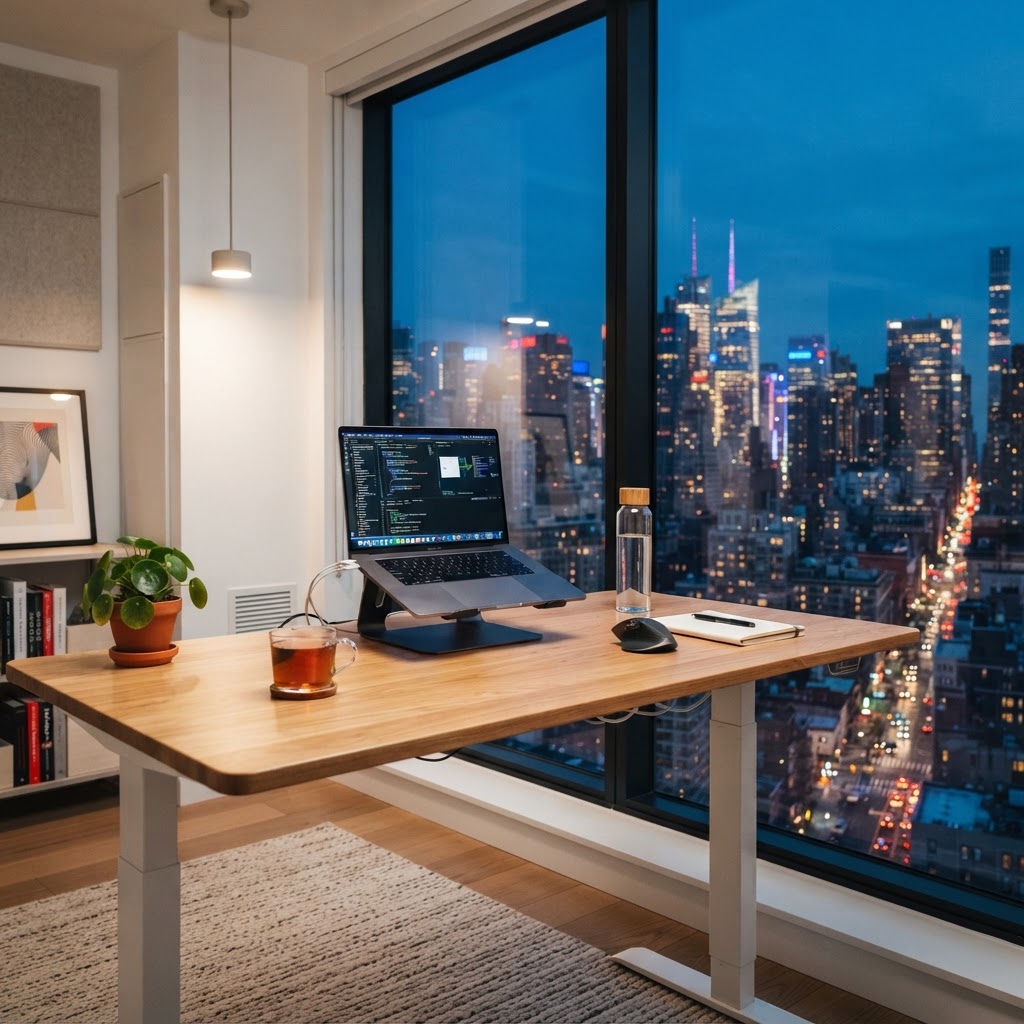
The Sitting Reality
Let us be clear about the problem. Prolonged sitting — defined as sitting for more than thirty minutes without a break — initiates a cascade of negative physiological effects. Metabolic rate drops. Insulin sensitivity decreases. Blood flow slows. The muscles of the legs, glutes, and core — the body's largest muscle groups — become inactive, contributing to weakness and postural deterioration. The hip flexors shorten and tighten. The shoulders round forward. The neck strains. These effects begin within the first hour of sitting and accumulate throughout the day. They are not fully reversed by an evening workout. The body that sits for eight hours and exercises for one is still, for most of its waking life, in a state that actively degrades health.
The best posture is the next posture. Stillness — in any position — is the enemy.
The Hourly Break
The single most effective intervention against the sitting problem is the hourly break — a brief period of movement, every hour, that interrupts the stillness. This does not need to be a workout. It can be as simple as standing up, stretching the arms overhead, walking to get water, or doing a few squats. Two minutes is enough. The goal is not exercise. It is the interruption of the sitting pattern — the reactivation of the metabolism, the restoration of blood flow, the resetting of posture. An hourly break, maintained throughout the day, adds up to twenty or more minutes of movement that would otherwise have been stillness. It is the single highest-leverage change a sedentary worker can make.
The Standing Option
A standing desk — or, more accurately, the ability to alternate between sitting and standing — is one of the most effective tools for reducing sedentary time. The key word is alternate. Standing all day is not better than sitting all day; it simply shifts the strain to different joints. The benefit comes from the alternation — the regular change of position that prevents the body from settling into any single posture for too long. A setup that allows sitting for part of the day and standing for part — even thirty minutes of each — is significantly healthier than either alone. If a standing desk is not available, improvised solutions work: a stack of books to raise a laptop, a high counter for part of the day, or simply standing during phone calls.