
Vol. 1 · No. 42 · FreeOctober 23

THE COUNTIO CHRONICLE

The World's Growing Library of Actionable Knowledge
Health & Wellness·Practical Guide·Career
Beginner7 min read

Staying Healthy During Busy Periods

The busiest periods are when health matters most and when it is most neglected. The solution is not more effort. It is a simplified fallback system.

Published July 18, 2026
busy lifestylehealthstress managementwellnesswork-life balance

Health routines are easy to maintain when life is calm. When the schedule is reasonable, the stress is manageable, and the demands are predictable, healthy habits flow naturally. But life is not always calm. There are periods — deadlines, launches, moves, crises, events — when the demands on your time and energy exceed the normal capacity, and the health routine is the first thing to go. This is precisely the wrong response. The busiest periods are when health matters most, because the body and mind are under the greatest strain. But they are also when health practices are hardest to maintain, because the time and energy they require are exactly what is scarce. The solution is not to push harder or to abandon health entirely. It is to have a simplified version — a fallback system that maintains the essentials when the full routine is impossible.

Staying Healthy During Busy Periods

The Fallback System

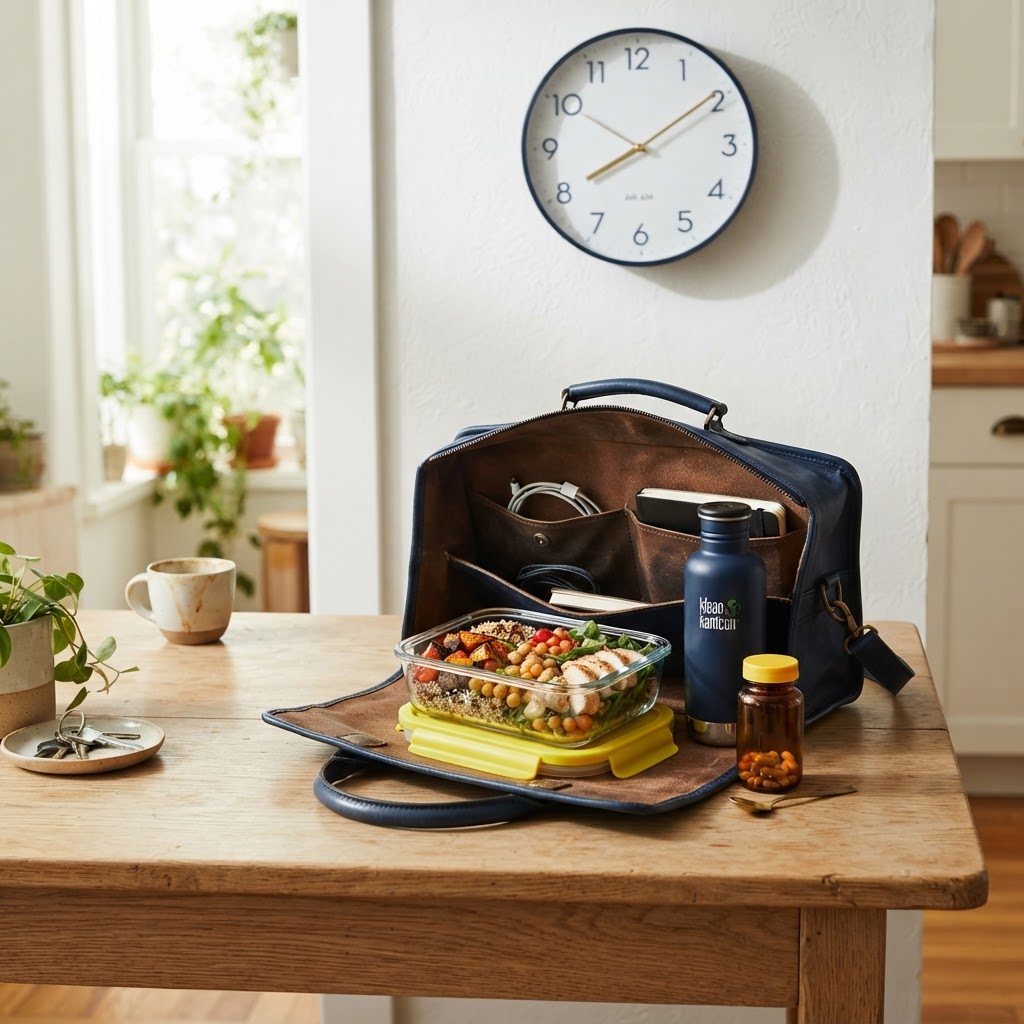
A fallback system is a stripped-down version of your health routine, designed for periods when the full version is not feasible. It is not a lesser routine. It is a survival routine — the minimum practices that prevent the complete collapse of health during high-demand periods. For most people, the fallback includes: a minimum sleep commitment (not the ideal, but a floor — say, six hours), a daily hydration practice (water, always available), one nutritious meal per day (even if the others are compromised), ten minutes of movement (even a walk counts), and one stress-management practice (even two minutes of breathing). These five practices, maintained during a busy period, keep the foundation intact. They are not the full routine. They are the floor that prevents falling through it.

The health routine you maintain during chaos is more important than the one you perfect during calm. Because calm is when you do not need it.

The Minimum Viable Habit

During busy periods, every habit must be reduced to its minimum viable version. The hour-long workout becomes ten minutes of bodyweight exercise. The home-cooked dinner becomes a pre-made healthy option from a store. The morning routine becomes a glass of water and three deep breaths. The meditation practice becomes two minutes of focused breathing. These minimums are not failures. They are the mechanism by which the habit survives the period. A habit that exists in miniature is a habit that can be expanded when the period ends. A habit that is abandoned entirely must be rebuilt from scratch, which is far harder than maintaining a reduced version.

Protecting Sleep Above All

If only one health practice can be maintained during a busy period, make it sleep. Sleep is the foundation on which all other health practices rest, and its absence degrades every dimension — cognitive function, emotional regulation, immune function, physical recovery. A busy period endured on insufficient sleep is longer, harder, and more damaging than the same period endured on adequate sleep. Protect sleep as non-negotiable, even if it means sacrificing other practices. The workout can be skipped. The meal can be simplified. The meditation can be abbreviated. But sleep — even if reduced, even if not ideal — must be maintained above a minimum floor. Everything else depends on it.

The Stress Management Imperative

Busy periods are, by definition, high-stress periods. The stress response is continuously activated, cortisol is elevated, and the body is in a state of sustained mobilization. Without active stress management — even brief, even minimal — this state degrades health rapidly. The fallback stress management practice does not need to be elaborate. Two minutes of deep breathing, done several times during the day, activates the parasympathetic nervous system and reduces cortisol. A ten-minute walk, without a phone, provides mental recovery. A brief period of silence — even in a car, even in a bathroom, even for one minute — provides a break in the stress activation. These micro-practices are not luxuries during busy periods. They are necessities, because the alternative — continuous, unbroken stress activation — is what converts a busy period into a health crisis.

The Recovery Period

Every busy period should be followed by a recovery period — a deliberate reduction in demands that allows the body and mind to return to baseline. This is not a luxury. It is a biological requirement, equivalent to the rest day after intense exercise. Without it, the accumulated stress of the busy period carries forward, compounding with the next period and eventually producing burnout, illness, or collapse. Build recovery into the schedule: after the deadline, after the launch, after the move, after the crisis. The recovery does not need to be long — a weekend, a few days of reduced demands — but it must be intentional and protected. The person who builds recovery into their life survives busy periods. The person who does not is eventually consumed by them.

Staying healthy during busy periods is not about perfection. It is about maintaining a floor — a minimum set of practices that prevent collapse and allow for rapid recovery when the period ends. Build the fallback system before you need it. When the busy period arrives, you will not have the time or energy to design it. You will only have the capacity to execute what already exists.

Continue Your Planning