
What makes it different
A traditional funeral tends to focus on the loss — the fact of death, the grief, the formality of saying goodbye. A celebration of life shifts the focus toward the life that was lived. It asks: who was this person? What did they love? What made people laugh when they were around?
This does not mean a celebration of life is cheerful in a forced way. Grief is still present. But the tone is warmer, more personal, and often more healing — because it gives people permission to remember with smiles as well as tears.
There is no timeline
One of the great freedoms of a celebration of life is that it does not need to happen immediately. Many families hold it weeks or even months after the death, when the initial intensity has passed and people are ready to gather and share stories. This can be a gift — it allows the event to be planned with care rather than urgency.
If there is also a traditional funeral or burial, the celebration of life can happen separately. Some families hold a small, private service for immediate family and then a larger celebration for the wider community.
Where to hold it
A celebration of life can happen anywhere that feels right. A community hall, a park, a restaurant, a backyard, a beach. The location should reflect the person — if they loved being outdoors, hold it outside. If they were a regular at a particular restaurant, ask if you can use a private room. If they gathered people around their own table, host it at home.
The space matters less than the feeling. What people remember is not the venue — it is the warmth of being together.
What to include
Unlike a traditional service, a celebration of life has no required elements. You can include whatever feels right:
- Stories: Invite people to share memories. This can be structured — asking a few people to speak — or open, where anyone who wants to can stand up.
- Music: Play the person's favorite songs, or music that reminds people of them. Live music, if someone in the family or friend group can provide it, adds a personal touch.
- Photos: Display photographs from different stages of the person's life. A slideshow or a simple table of framed photos gives people something to gather around and talk about.
- Food and drink: Serve the person's favorite foods, or dishes from their cultural tradition. Sharing a meal is one of the oldest ways humans mark important moments.
- An activity: Some celebrations include a candle lighting, a tree planting, a balloon release, or a moment where everyone writes a memory on a card. These activities give people something to do with their feelings.
Who should speak
Unlike a funeral, where one person often delivers a eulogy, a celebration of life can include many voices. Invite family members, friends, coworkers, neighbors — anyone who has a story worth sharing. Not everyone will want to speak, and that is fine. The invitation itself is meaningful.
If you are worried about the event feeling unstructured, designate someone to guide it — a friend or family member who can introduce speakers, transition between activities, and keep things moving without being rigid.
Make it personal
The best celebrations of life feel like the person themselves. If they were funny, let it be funny. If they were quiet, let it be quiet. If they loved a particular hobby, sport, or place, weave that into the event. The goal is not to create a perfect event. It is to create a gathering where people leave feeling that they truly remembered someone they loved.
Let people contribute
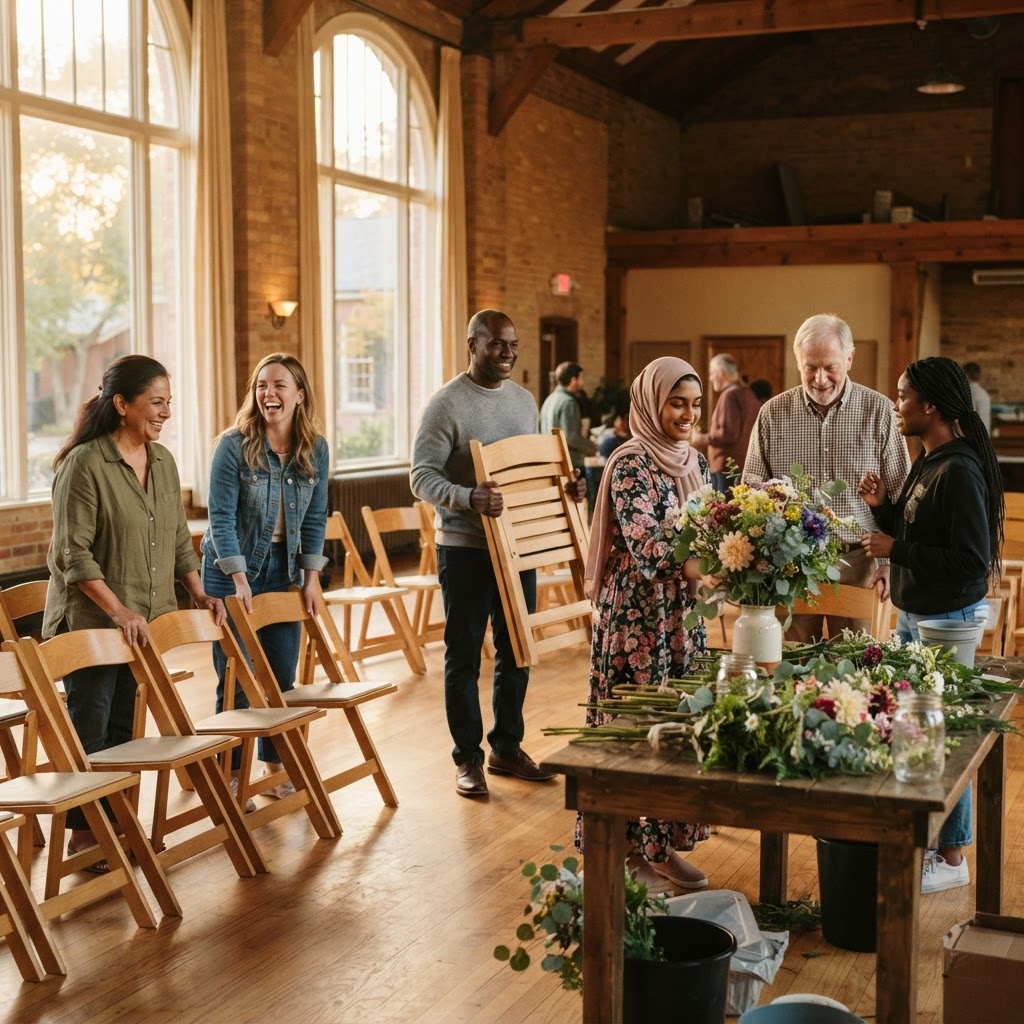
People often want to help but do not know how. A celebration of life offers many opportunities — someone can make food, someone can create a photo display, someone can handle music, someone can collect written memories. Giving people a role gives them a way to participate that goes beyond attending.
It does not need to be perfect
Things will go differently than planned. The playlist might skip. The slideshow might not load. Someone might cry during a speech, or laugh at an unexpected moment. None of this matters. What matters is that people came together to remember someone, and that they left feeling a little more connected to each other and to the person who is gone.