
Vol. 1 · No. 42 · FreeOctober 23

THE COUNTIO CHRONICLE

The World's Growing Library of Actionable Knowledge
Travel·Editorial·Travel
Beginner7 min read

July 2026 · Volume 1 · Issue 29

Avoiding Common Tourist Mistakes

Tourist mistakes are universal and avoidable. Learn to recognize over-scheduling, tourist-bubble eating, and cultural disconnection before they diminish your trip.

Published July 18, 2026
tourist mistakestravel tipstravel advicetravel guide

Tourist mistakes are universal. Every traveler has made them — the over-scheduled itinerary, the restaurant near the attraction, the taxi instead of the metro. These mistakes are not failures of character; they are defaults of inexperience. The good news is that most are predictable, and predictability is the first step toward avoidance.

Avoiding Common Tourist Mistakes

The Mistakes Every Traveler Makes

Tourist mistakes are universal. Every traveler, regardless of experience, has made them — and most make the same ones. The difference between the experienced traveler and the novice is not that the experienced one makes fewer mistakes. It is that they have learned which mistakes are avoidable and which are simply part of the journey.

The goal is not to eliminate all mistakes — that would require eliminating the spontaneity that makes travel rewarding. The goal is to avoid the mistakes that come from carelessness rather than curiosity, from assumption rather than openness. These are the mistakes that diminish the experience without adding to it.

The best traveler is not the one who never makes mistakes. It is the one who learns from the mistakes they cannot avoid — and avoids the ones they can.

Over-Scheduling

The most common tourist mistake is over-scheduling. The belief that more is better — more cities, more attractions, more activities — leads to trips that are exhausting rather than enriching. The traveler who visits five cities in seven days sees a lot and experiences little. They return home with photographs of places they barely inhabited and memories that blur together.

The fix is not to plan less but to plan differently. Choose fewer destinations and experience them more deeply. Leave white space in your itinerary for the unexpected. Accept that you cannot see everything, and focus on seeing well what you do see. Depth, not breadth, is what creates meaningful travel.

Eating Like a Tourist

The second most common mistake is eating at restaurants that cater to tourists rather than locals. These establishments are easy to find — they are near major attractions, have menus in multiple languages, and have someone outside inviting you in. They serve food that is familiar, safe, and mediocre. Eating this way is not just a missed culinary opportunity — it is a missed cultural one.

The fix is to eat where locals eat. Walk a few streets away from the main attractions. Look for restaurants where the menu is in the local language, where the clientele is local, and where there is a line at mealtimes. This simple shift transforms your relationship with a destination's food culture and often produces the most memorable meals of your trip.

The restaurant with the English menu and the photo display is not serving food. It is serving convenience. The restaurant around the corner is serving dinner.

Disconnecting From the Culture

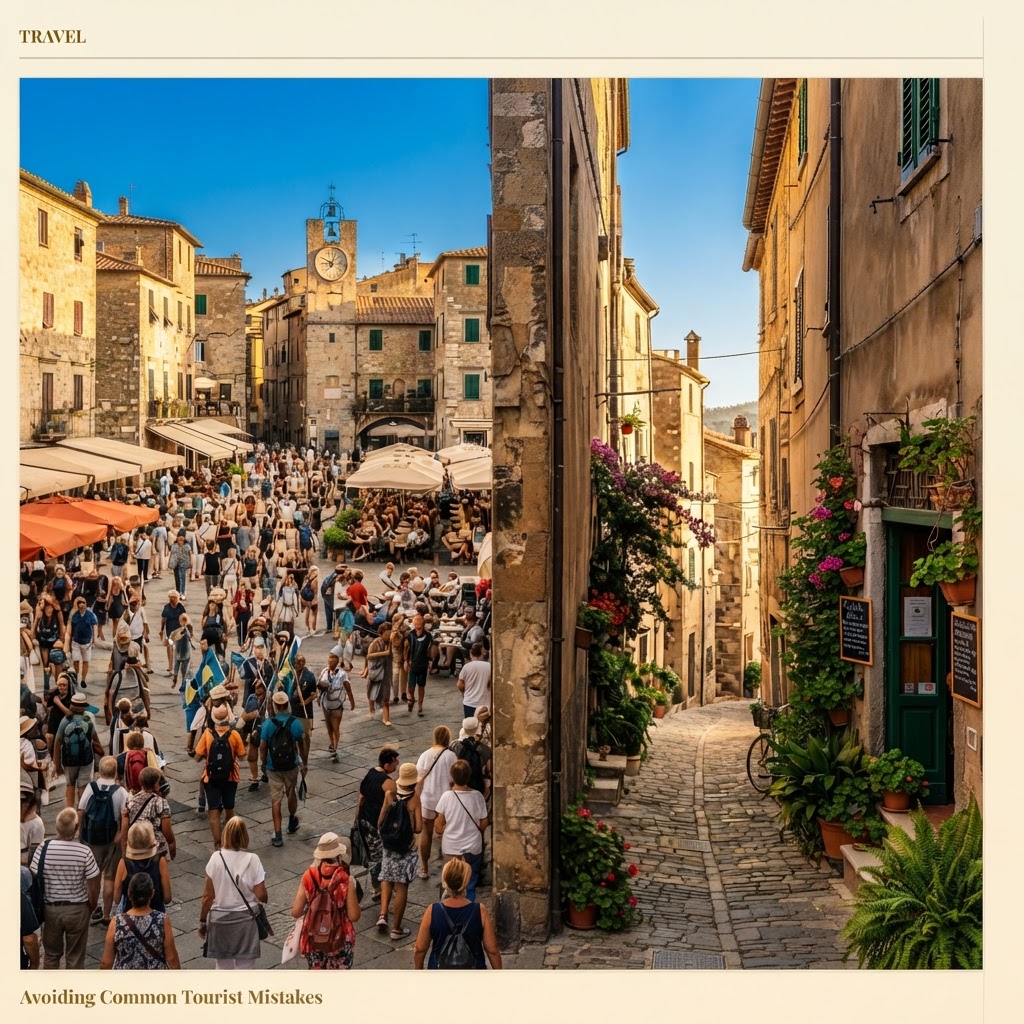
The third common mistake is remaining within a tourist bubble — staying in tourist areas, using tourist services, interacting only with other tourists. This approach is comfortable but isolating. It protects you from the culture you came to experience. The traveler who never leaves the tourist zone has not visited a country; they have visited a resort.

The fix is engagement. Use local transportation. Shop at local markets. Learn a few words of the language. Strike up conversations. These interactions are where the culture lives, and they are available to any traveler willing to step outside their comfort zone. The culture is not in the museum — it is in the street, the market, the café, the bus.

Avoiding common tourist mistakes is ultimately about intentionality. The tourist who drifts through a destination, following the path of least resistance, makes every mistake by default. The traveler who approaches each decision with awareness — where to eat, where to go, how to engage — avoids the mistakes that diminish the experience and makes the ones that enrich it. Travel with intention, and the mistakes you make will be the ones worth making.

Continue Your Planning